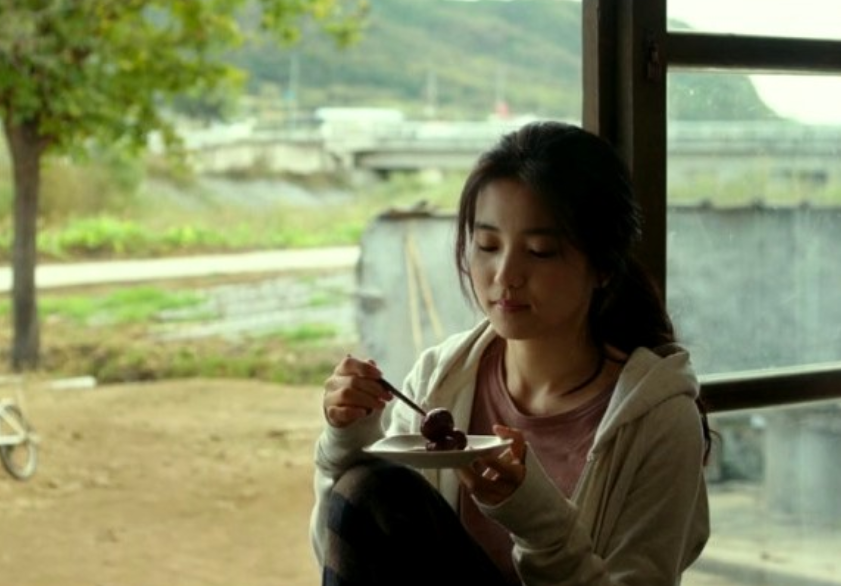
"The fact that braised chestnuts taste so good means autumn has deepened." — Actor Kim Tae-ri's line in "Little Forest"
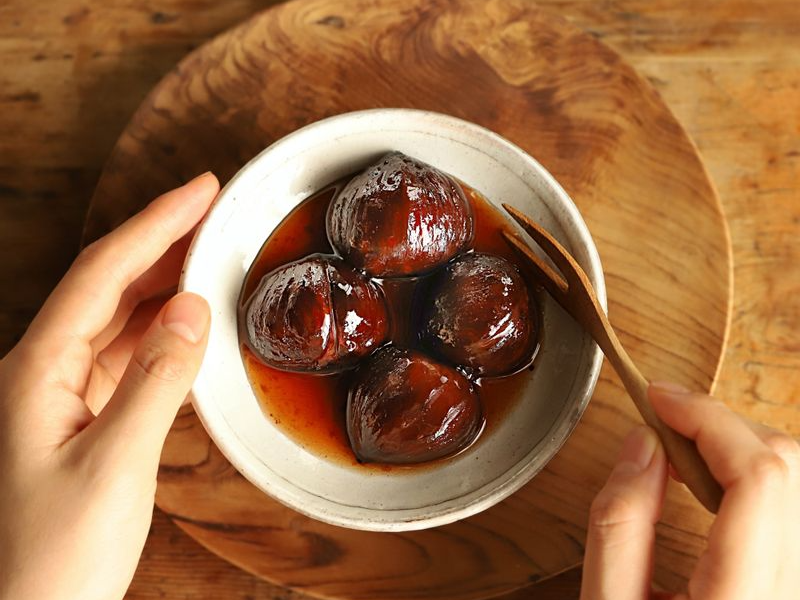
Chestnuts are at their most nutritious and flavorful from September through October. Braised chestnuts — a sweet autumn staple many associate with the season — gained wider attention through the film "Little Forest," in which Kim Tae-ri makes the dish from freshly picked sweet chestnuts and savors a bite.
The recipe calls for peeling raw chestnuts, boiling them, then simmering them slowly over low heat for an extended period. It is labor-intensive and time-consuming — a slow-food approach that invests care and time into cooking, in contrast to fast food or ready-made meals.
The effort pays off in several ways. The crumbly, sweet chestnuts pair well with a wide variety of dishes, and a single batch keeps for a long time in the refrigerator. Stored in heat-sterilized glass jars, braised chestnuts can last up to two months — as long as the chestnuts remain fully submerged in the syrup. If they are not covered, mold can develop.
Braised chestnuts work as an ingredient in a range of baked goods, including cakes and tarts. They also pair well spooned over Greek yogurt.
Mashed, braised chestnuts can serve as a chestnut spread for bread, crackers or bagels. They can also be stirred into milk to make a chestnut latte.
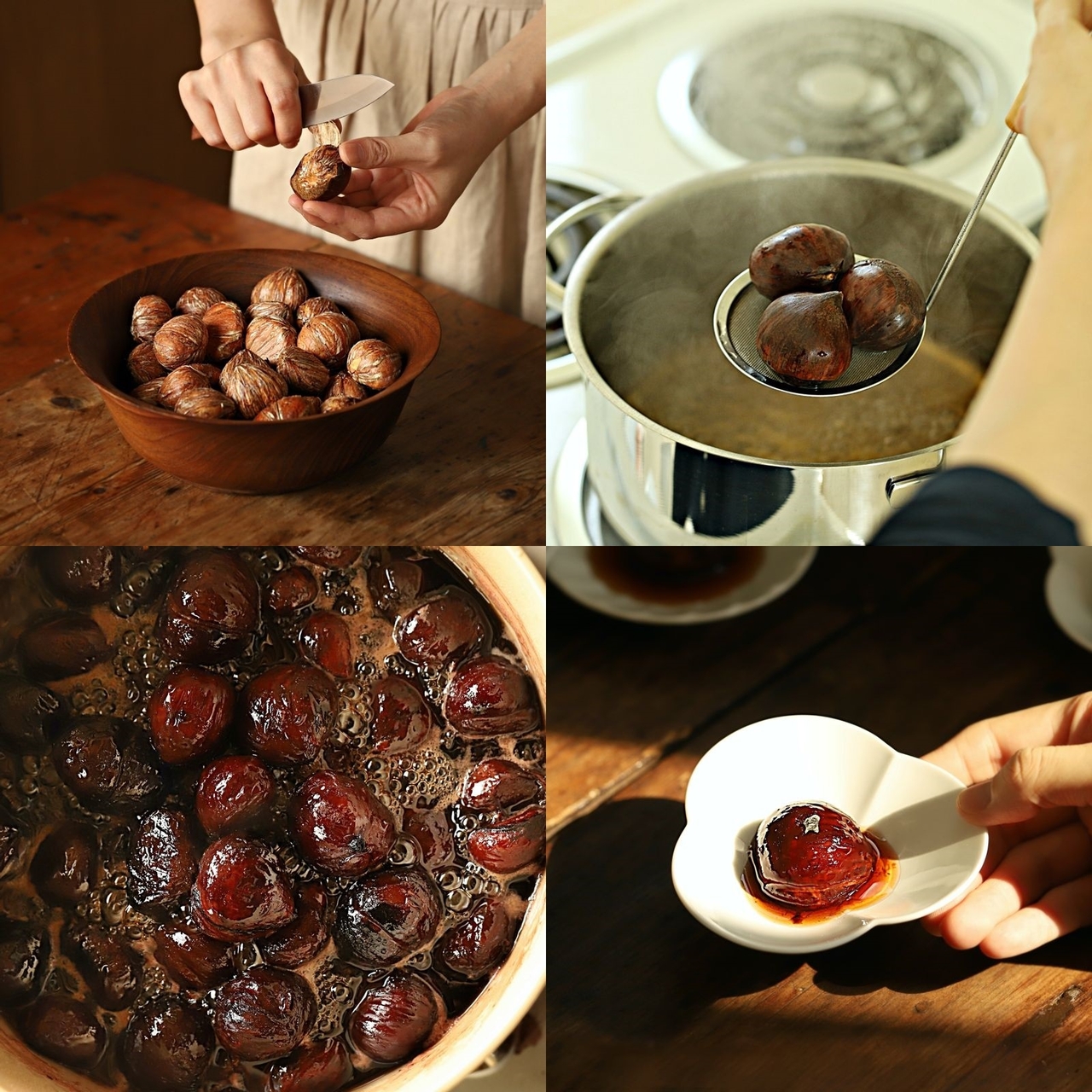
To make braised chestnuts, soak them in lukewarm water for about half a day, then remove only the outer shell. Place them in a pot, add enough water to cover, sprinkle in baking soda and leave for about 10 hours. Use a toothpick to remove any inner skin lodged in the crevices.
Bring the pot — baking soda water and all — to a gentle boil over low heat for 20 minutes, skimming off any foam that rises. Drain, rinse under cold water, then cover with fresh water and simmer over low heat for another 20 minutes. Repeat this process two to three times.
Add fresh water to cover the chestnuts again, stir in sugar and simmer over low heat for one hour. Once the liquid has reduced by about one-third, add soy sauce and continue simmering over low heat for 10 minutes. Two tablespoons of wine at this stage is optional. Transfer the finished chestnuts to sterilized glass jars and refrigerate.
Chestnuts, the dish's main ingredient, contain all five major nutrients — carbohydrates, fat, protein, vitamins and minerals. According to the Ministry of Food and Drug Safety's food nutrition database, 100 grams of raw chestnuts contain 33.4 grams of carbohydrates, 6 grams of dietary fiber, 3.1 grams of protein and 0.7 grams of fat.
Chestnuts are particularly rich in potassium, providing 442 milligrams per 100 grams. They also contain vitamin B1 and vitamin C, both known to help relieve fatigue. However, their relatively high carbohydrate content and moderate calorie count — 153 kilocalories per 100 grams — mean they are best enjoyed in moderation.
gorgeous@heraldcorp.com