As the use of GLP-1 obesity drugs such as Wegovy grows worldwide, "nutrient density" is emerging as a new dietary keyword — a way to get adequate nutrition while eating less than before.
When food intake drops sharply due to obesity medication, nutritional deficiencies can follow. A 2025 study by US wellness company GNC Holdings found that GLP-1 receptor agonist users were deficient in protein, vitamins, minerals and other key nutrients. In 2025, the American Society for Nutrition warned in a guidance statement that caloric intake among GLP-1 receptor agonist users can fall by 16 to 39 percent, and called for dietary management to prevent nutritional deficiencies and loss of muscle and bone mass.
The reverse problem also exists: consuming plenty of calories while still lacking essential nutrients. "Nutritional imbalance" encompasses both conditions — and roughly three in 10 South Koreans fall into that category.
The Korea Disease Control and Prevention Agency's 2024 National Health and Nutrition Survey found that 16.7 percent of Koreans aged 1 and older had insufficient nutrient intake, while 15.7 percent consumed more calories and fat than needed. Combined, the two groups account for 32.4 percent of the population.
Nutrition experts advise building meals around low-calorie, high-nutrient-density foods as the most practical way to eat the right amount while meeting balanced nutritional needs.
A food ranks high in nutrient density when it delivers a relatively large amount of beneficial nutrients — vitamins, minerals, dietary fiber and the like — per calorie. The score measures how many nutrients a food provides relative to its caloric content.
No single internationally standardized score exists for individual foods. Only individual studies have been published, and nutrient-density rankings vary depending on the scoring model used.
For fruit, a widely cited reference is a 2014 study by the US Centers for Disease Control and Prevention, which scored 17 nutrients per 100 kilocalories against daily recommended intake levels. Among the fruits examined, lemon ranked highest with a score of 18.72, followed by strawberry (17.59), orange (12.91), lime (12.23), grapefruit (11.64) and blackberry (11.39). The ranking reflects how much of those 17 specific nutrients each fruit provides per calorie — not a general measure of which fruit is most nutritious overall.
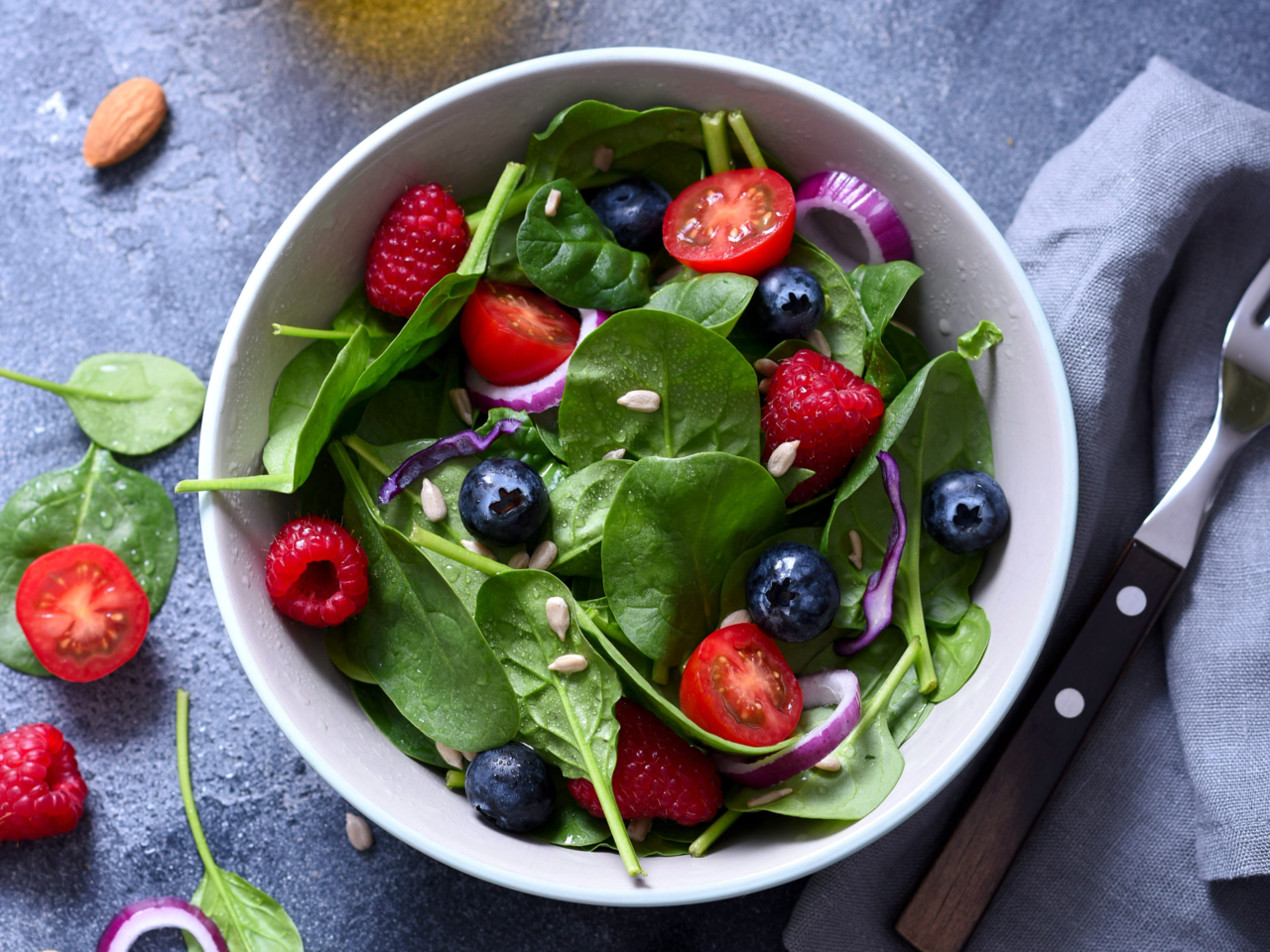
In 2020, researchers at the University of Washington compared nutrient density across fruit groups using nine components: eight nutrients — protein, dietary fiber, vitamins A and C, calcium, iron, potassium and magnesium — plus the antioxidant flavonoid. Berries and citrus fruits scored higher than other fruit groups. Berries were boosted by anthocyanins, while citrus scored well on vitamin C and flavanones — both anthocyanins and flavanones belong to the flavonoid family.
For vegetables, a 2014 study by researchers at William Paterson University calculated nutrient-density scores based on 17 nutrients: potassium, dietary fiber, protein, calcium, iron, thiamin, riboflavin, niacin, folate, zinc and vitamins A, B6, B12, C, D, E and K. Watercress topped the rankings with a perfect score of 100, followed by Chinese cabbage (91.9), Swiss chard (89.2), beet greens (87 points) and spinach (86.4). Kale, often called a superfood, came in 15th with 49 points. Watercress, Chinese cabbage and kale all belong to the cruciferous vegetable family.
This ranking, too, scores 17 nutritional components per 100 kilocalories — which explains why leafy greens, with their very low calorie counts and rich vitamin and mineral content, dominate the top of the list.
gorgeous@heraldcorp.com