The way consumers choose bread is changing. More shoppers are looking beyond calorie counts and paying attention to the glycemic index, or GI.
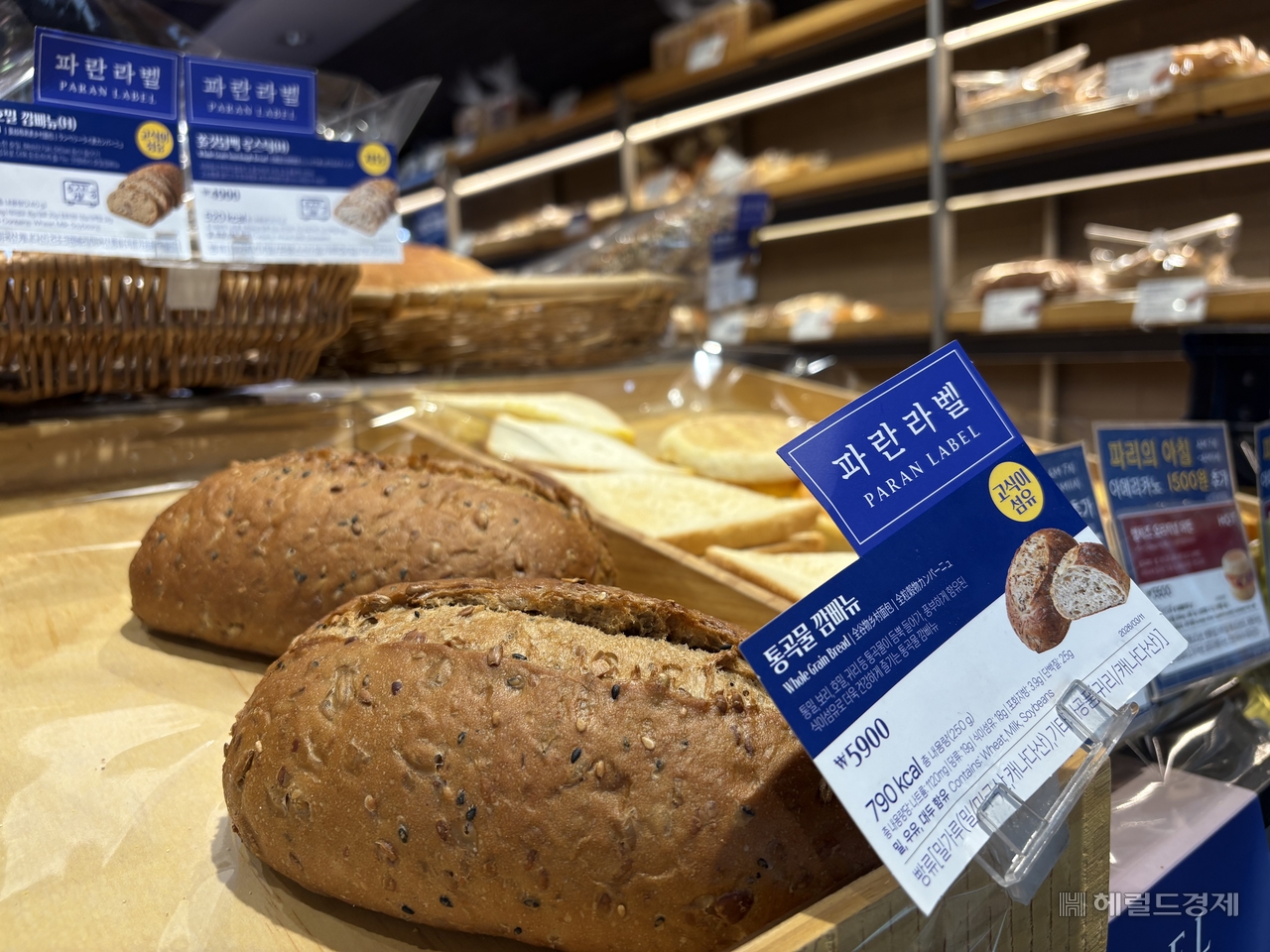
Paris Baguette's "Blue Label" brand is a prime example. Launched in February last year, the line has grown five times faster than the bakery chain's existing health-oriented bread products, averaging about 2 million units sold per month and surpassing 24 million in cumulative sales.
A Paris Baguette official said the products were developed through an industry-academia partnership between SPC Group's Food and Biotechnology Research Institute and the University of Helsinki in Finland, applying a third-generation whole-grain fermentation starter. "The focus was on increasing whole-grain content to reduce the burden of blood sugar spikes," the official said, adding that the company's proprietary whole-grain fermentation starter technology improved the coarse, dense texture that whole-grain breads tend to have.
As the whole-grain bread trend grows alongside advances in bakery technology, more products marketed as "low-sugar" are hitting shelves. Shoppers who rely solely on labels reading "whole wheat," "rye" or "sourdough" may be falling into a trap, however — because a bread's GI depends on the proportion of its ingredients and how it is made.
Even breads labeled identically as "whole-grain" can differ significantly in their actual whole-grain content. A whole-wheat loaf, for instance, may consist mostly of refined flour with only a small amount of whole-wheat flour.
A study by Kyung Hee University researchers, published in the British Journal of Nutrition in 2018, measured the GI of six types of bread — white sandwich bread, rice bread, dinner rolls, bagels and rye bread — in 152 healthy adults. The lowest GI was not rye bread (64.9) but white-flour dinner rolls (55.2). Bagels recorded the highest average GI at 77.4, surpassing even white sandwich bread at 70.7. The researchers said a bread's GI can vary depending on its nutritional composition, particle size, and cooking and processing methods.
A dark brown color is also no guarantee that a bread is a low-GI whole-grain product. Some loaves get their color from malt, caramel coloring or molasses.
The same caution applies to sourdough, which relies on fermentation. Sourdough cannot be assumed to be a low-GI bread. Its GI varies depending on whether the base flour is white or whole-grain, the ratio of whole grains and rye, fermentation conditions, and whether sugar has been added.
Even when whole grains are used, adding sugar, syrup, red bean paste or dried fruit will push the GI higher.
The impact of production methods on GI is also evident in baguettes, which are widely regarded as high-GI breads. A baguette is made with only white flour, water, salt and yeast — no added sugar — so it is low in dietary fiber and fat, causing blood sugar to rise quickly. Its GI in the international GI database stands at 95. Yet a 2007 experiment by researchers at Hôtel-Dieu Hospital in Paris found that baguettes made using traditional French methods had a GI of just 57.
For those managing blood sugar, the best approach is to start by choosing 100 percent whole-grain bread with no added sugar, and to look for products with coarser grain particles alongside a high whole-grain content — breads where whole rye, oats, sunflower seeds and other grains or seeds are visibly present and can be felt when chewing. A study from the University of Toronto, published in the American Journal of Clinical Nutrition in 1986, found that ordinary whole-rye bread had a GI 11 percent lower than white bread, while bread made with coarsely ground whole-rye kernels was 52 percent lower.
When eating bread, avoid consuming it after a full meal or on its own. Pairing it with protein, dietary fiber and unsaturated fats can further slow the rise in blood sugar. Good options include spreading almond butter or peanut butter on bread, or eating it alongside protein-rich foods such as eggs or Greek yogurt, or a fiber-rich salad.
One food to be cautious about pairing with bread is fruit juice. Blending strips fruit of the dietary fiber that slows blood sugar absorption, and without that fiber, the fruit's sugars in liquid form cause blood sugar to spike more rapidly.
gorgeous@heraldcorp.com