Kimchi lactic acid bacteria shown to bind and expel nanoplastics in the gut; anti-obesity function earns official recognition in South Korea

"This popular fermented food may help remove nanoplastics from our bodies." — Science Daily, May 2026
The "popular fermented food" the outlet was referring to is kimchi. As fermented foods gain global traction, researchers and health media worldwide are taking a closer look at what kimchi can do — not just for gut health, but also for expelling nanoplastics from the body and reducing body fat.
Science Daily reported that Korean scientists had found nanoplastic particles could be "captured by kimchi" and expelled through feces before being absorbed by organs. The finding came from a paper by the World Institute of Kimchi published in the international journal Bioresource Technology.
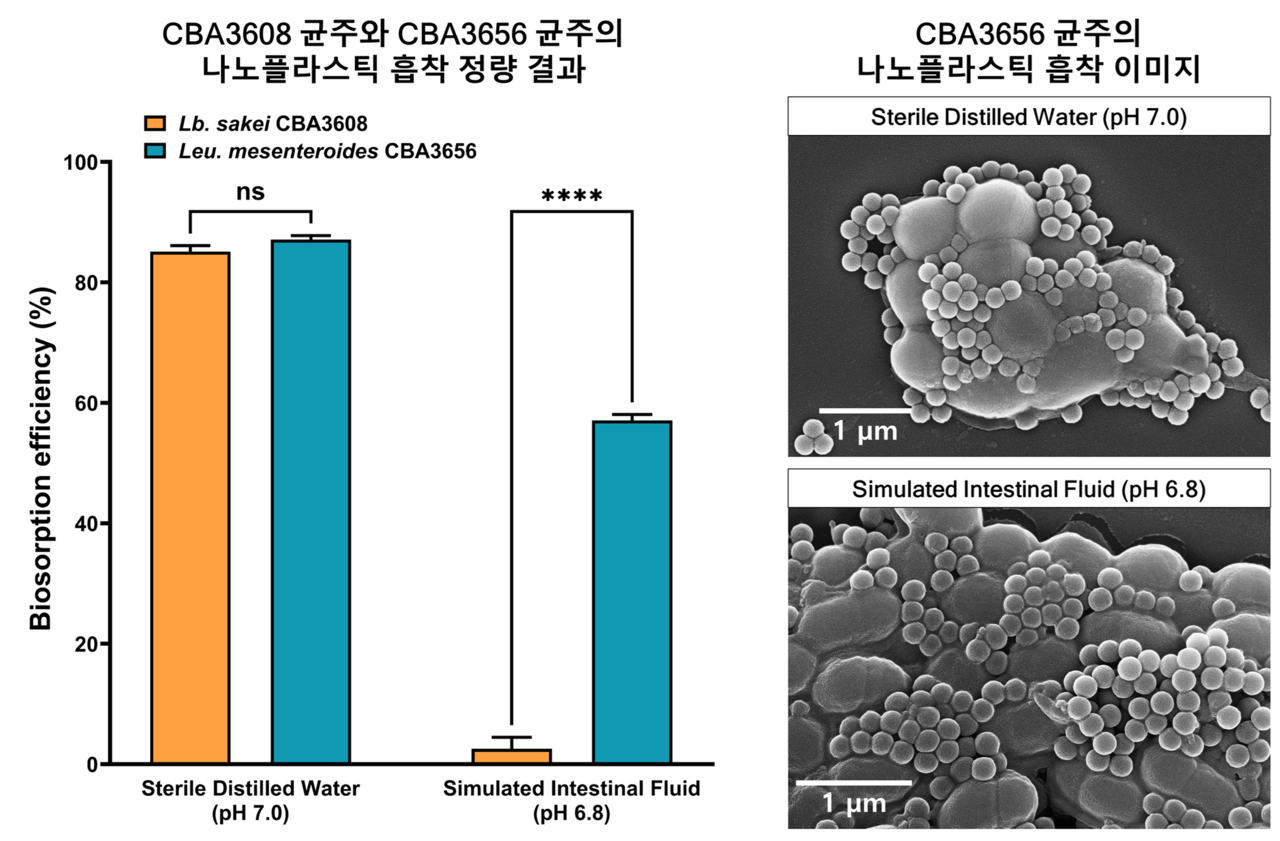
According to the research, a lactic acid bacterium found in kimchi — Leuconostoc mesenteroides CBA3656 — adsorbed 87 percent of polystyrene nanoplastics (PS-NPs) in laboratory tests. Animal experiments yielded similar results: mice given the bacterium showed more than twice the level of nanoplastics detected in their feces compared with the control group.
Nanoplastics are ultrafine plastic particles smaller than 1 micrometer — far tinier than microplastics, which measure less than 5 millimeters. Because of their extremely small size, nanoplastics can accumulate across multiple organs.
"At a time when plastic pollution is expanding beyond an environmental issue into a public health concern, microorganisms derived from kimchi have opened up a new avenue for addressing it," the researchers said.
Verywell Health, a US health outlet, also covered the findings on June 9. Outlets reporting on the study noted that because the research was conducted in vitro and in animals, additional clinical trials involving human subjects would be needed.
Kimchi's lesser-known benefits extend further. The fermented food has also been recognized for an anti-obesity function that may help reduce body fat — a property the Ministry of Food and Drug Safety officially acknowledged in March by registering it as an "individually recognized ingredient."
The "individually recognized ingredient" designation is granted by the government after reviewing scientific data submitted by companies, including human application tests and toxicity studies, to verify both safety and efficacy. The registration is significant because it marks the first time a kimchi-derived microorganism has been recognized as a functional ingredient for health functional foods.
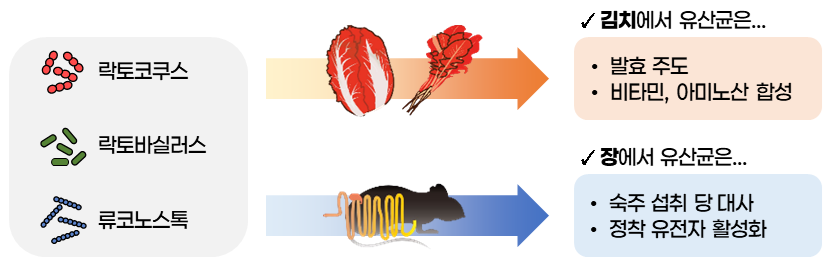
There is another noteworthy finding. Kimchi lactic acid bacteria appear to switch their functional mode after migrating into the gut, adapting to their new environment.
A World Institute of Kimchi paper published earlier this year in Food Research International found that kimchi lactic acid bacteria selectively regulate only the genes they need in response to environmental changes, effectively switching their function depending on where they are. The bacteria activate different pathways in the kimchi-making environment versus the gut. In the kimchi environment, metabolic pathways for synthesizing vitamins and amino acids are activated, supporting the fermentation process. In the gut, gene expression related to sugar metabolism increases, allowing the bacteria to help the host body use ingested nutrients more efficiently.
Won Tae-ung, the institute director who led the research, said the findings were "core evidence that kimchi is a living, highly functional food" — demonstrated by the bacteria's ability to restructure themselves into a form optimized for the gut environment.
gorgeous@heraldcorp.com