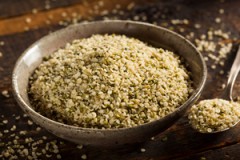
Pine nuts hit their peak season in November, and most Koreans know them as a garnish scattered over finished dishes. But blending them into a smooth pine nut milk opens up a far wider range of uses — tossed through salads, spread on bread or stirred into dressings. Particularly rich in unsaturated fats, pine nut milk also makes a healthier stand-in for cream.
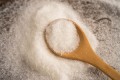
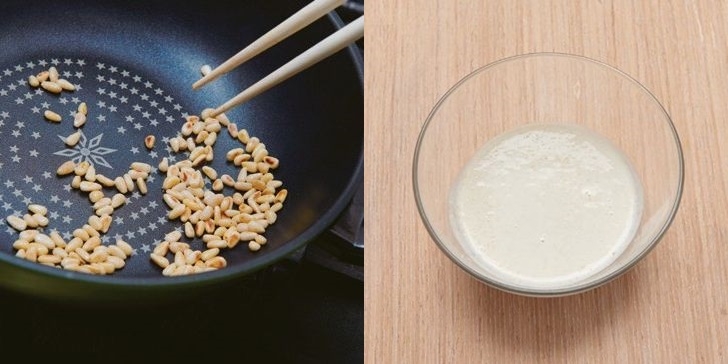
Making pine nut milk is straightforward: blend pine nuts with water until smooth, or stir store-bought pine nut powder into water.
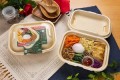
The mild, nutty flavor pairs especially well with chicken breast. One standout dish is pine nut chicken salad — a cold preparation that balances the lean taste of chicken with the richness of pine nut sauce.
According to a recipe from Woori's Table, a food and commerce platform, the dish starts with a sauce made by combining 1 tablespoon of pine nut powder, 2 tablespoons of water, 1 tablespoon of sugar, 1 tablespoon of vinegar, a pinch of salt and 3 tablespoons of mayonnaise. Cooked chicken breast, shrimp and cucumber are then tossed through the sauce to finish.
Pine nuts also work well in basil pesto, lending themselves to trendier cooking. The sauce is made by blending basil with pine nuts, cheese, garlic and olive oil, and it goes beyond pasta — it doubles as a sandwich spread, salad dressing or topping for bread. Perilla leaves can substitute for basil if needed.
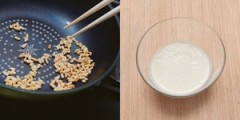
To make it, toast the pine nuts in a dry pan over low heat, taking care not to scorch them, then spread them out to cool. Add the basil, pine nuts, garlic, cheese, olive oil and salt to a blender and pulse to the desired texture.
However, pesto's olive oil and cheese add their own fat and calories on top of those from the pine nuts. While most of the fat in pine nuts is the beneficial unsaturated kind, moderation is still advisable for anyone watching their calorie intake.
According to data from the US Department of Agriculture, dried pine nuts contain 673 kilocalories per 100 grams — about 67 kilocalories per 10 grams.
That high calorie count reflects a substantial fat content: 100 grams of dried pine nuts contain about 68.4 grams of fat, of which unsaturated fatty acids account for 52.8 grams, or 77 percent of total fat. Within that unsaturated fraction, oleic acid (an omega-9) makes up 34 percent and linoleic acid (an omega-6) accounts for 62 percent.
Pine nuts are also a good source of protein, with 13.7 grams per 100 grams, and contain 9.3 milligrams of vitamin E, which acts as an antioxidant.
Late autumn is the ideal time to enjoy freshly harvested pine nuts from the current year's crop. The nuts ripen in the autumn following the year the tree flowers, with harvests in growing regions such as Gapyeong continuing through November. Their distinctive nutty aroma and flavor make them a welcome addition to the autumn table.
gorgeous@heraldcorp.com