In season through October, pine mushrooms grow in symbiosis with pine trees — unlike the year-round king oyster mushroom. Their distinctive aroma calls for light cooking.
October is prime season for pine mushrooms, known in Korean as "songyi." Their name is easily confused with the king oyster mushroom — called "saesongyi" in Korean — but the two are quite different: pine mushrooms carry a distinctive piney fragrance and grow in symbiosis with living pine trees.
According to the Korea Forest Service, pine mushrooms are most actively harvested from late September through late October. A comparison of auction volumes over the past three years shows that more than 70 percent of annual output comes after mid-September.
Because pine mushrooms grow on the roots of living pine trees, they are notoriously difficult to cultivate. That sets them apart from oyster, king oyster and enoki mushrooms, which are farmed artificially and available year-round.
The National Institute of Forest Science has succeeded in growing pine mushrooms artificially by infecting pine seedlings with the fungus, but most mushrooms sold on the market are still wild, harvested from pine forests. They are produced mainly in mountainous areas, including Yangyang-gun and Inje-gun in Gangwon Province and Uljin-gun and Bonghwa-gun in North Gyeongsang Province.
Their signature aroma — reminiscent of pine — is one of their defining traits. King oyster mushrooms have a milder scent by comparison, though the two share a similarly firm, springy texture.
Nutritionally, pine mushrooms are high in dietary fiber and low in calories. According to the Rural Development Administration, 100 grams of raw pine mushroom contains 4.6 grams of dietary fiber and just 21 kilocalories. They also provide minerals including potassium, iron and zinc.
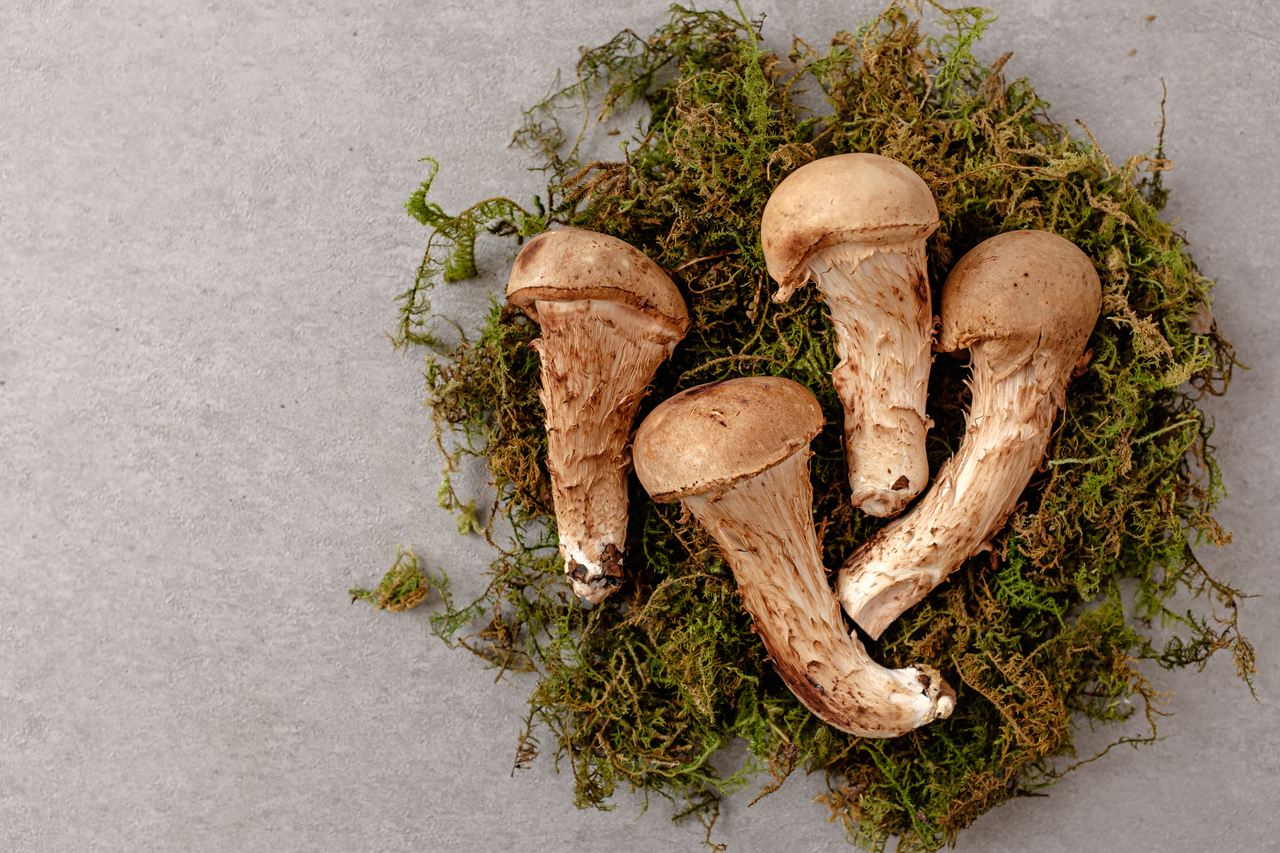
To preserve the pine mushroom's prized aroma, keep washing brief and seasoning light. When cleaning, use a soft brush to gently sweep away any soil or pine needles from the surface. Trim the base with a knife to remove any embedded dirt, then wipe off remaining residue with a lightly dampened cloth or paper towel. If soil still remains, give the mushroom a quick rinse under cold running water and pat it dry immediately.
For storage, keep mushrooms you plan to eat right away in the refrigerator. For longer storage, wrap each one individually in a paper towel — unwashed — and freeze them, making sure they are not pressed against one another.
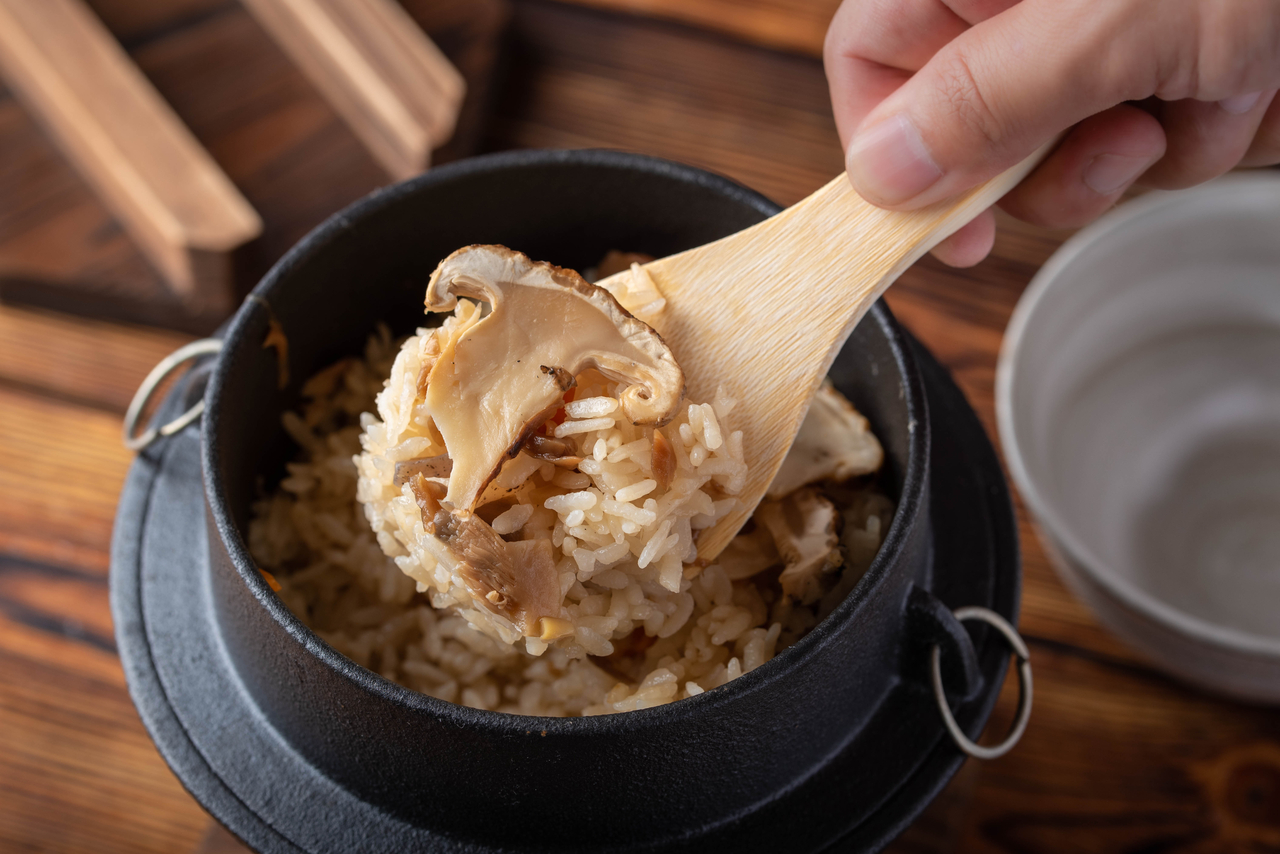
When cooking, avoid prolonged heat and heavy seasoning. Salt-grilling and stone-pot rice are two classic preparations that let the mushroom's natural flavor shine.
For salt-grilled pine mushrooms, slice the mushrooms lengthwise to about 5 millimeters thick. Lightly coat a pan with cooking oil and heat it over medium-low. Lay the slices in a single layer and cook, turning once, until done. Sprinkle with a small amount of salt, and add a touch of sesame oil just before serving if desired.
Pine mushroom stone-pot rice is a nourishing autumn dish that showcases the mushroom's fragrance. To make it, rinse the rice, soak it for 30 minutes, then drain. Brush the dirt off the mushrooms, rinse briefly and tear them along the grain. Stir sliced green onions into the seasoning soy sauce. Place the soaked rice in a pot, pour in kelp stock, then arrange the mushrooms and ginkgo nuts on top. Cover and bring to a boil over medium heat, then reduce to low and cook for 15 to 20 minutes. Turn off the heat and let the rice steam, lid on, for another five minutes before serving.
gorgeous@heraldcorp.com