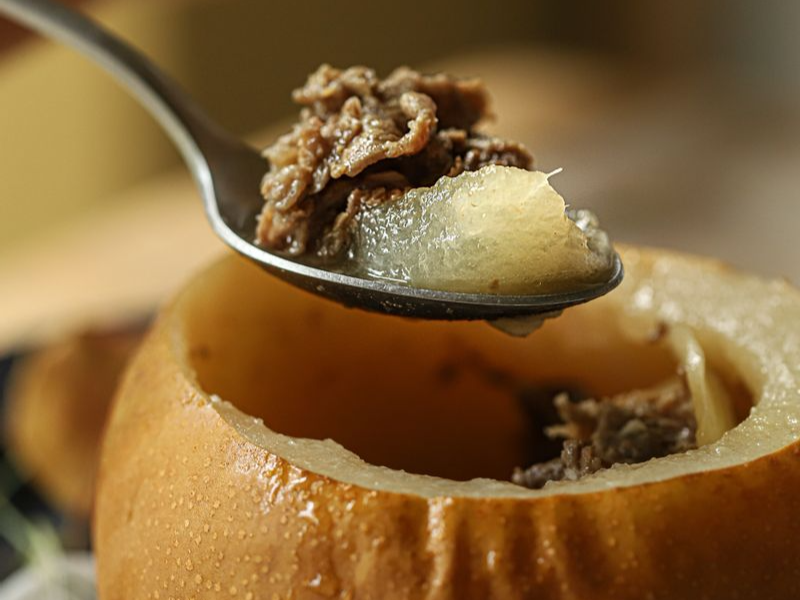
In autumn, when temperatures swing sharply between day and night, Korean pears are prized as a seasonal fruit that supports health during the transitional period. If you have pears left over from Chuseok gifts, turning them into baekkul jjim — steamed pear with honey — is a great way to use them. Adding bulgogi and bellflower root (doraji) boosts the dish's nutritional balance, making it an ideal wellness meal for the season.
Baekkul jjim is often compared to baesuk, a traditional pear drink, though the two differ in preparation. According to the agro-food information portal run by the Korea Agency of Education, Promotion and Information Service in Food, Agriculture, Forestry and Fisheries, baesuk is a chilled beverage made by simmering pear pieces studded with whole peppercorns in ginger-honey water, then serving the pear and broth together cold. Baekkul jjim, by contrast, involves hollowing out a pear, filling it with jujubes, ginger, honey and other ingredients, and steaming or double-boiling it. However, in everyday usage, any dish involving cooked pear is often loosely called baesuk.
Both pear and bellflower root are traditional ingredients well suited to nutritional support during seasonal transitions. Pears are rich in potassium, vitamin C and dietary fiber. Steaming or double-boiling the fruit softens the flesh, making it easy to eat when the throat feels irritated or appetite is low.
Adding bellflower root strengthens the effect further. Bellflower root is a well-known ingredient for respiratory health, associated with relief from coughs and phlegm. It stimulates secretion in the bronchial mucosa, aids in expelling phlegm and eases throat discomfort. It is also particularly rich in triterpenoid saponins, including platycodin D.
Ginger, jujube and cinnamon — other common additions to baekkul jjim — can also help warm the body during the change of seasons. They are known to contain compounds that support circulation and body temperature regulation.
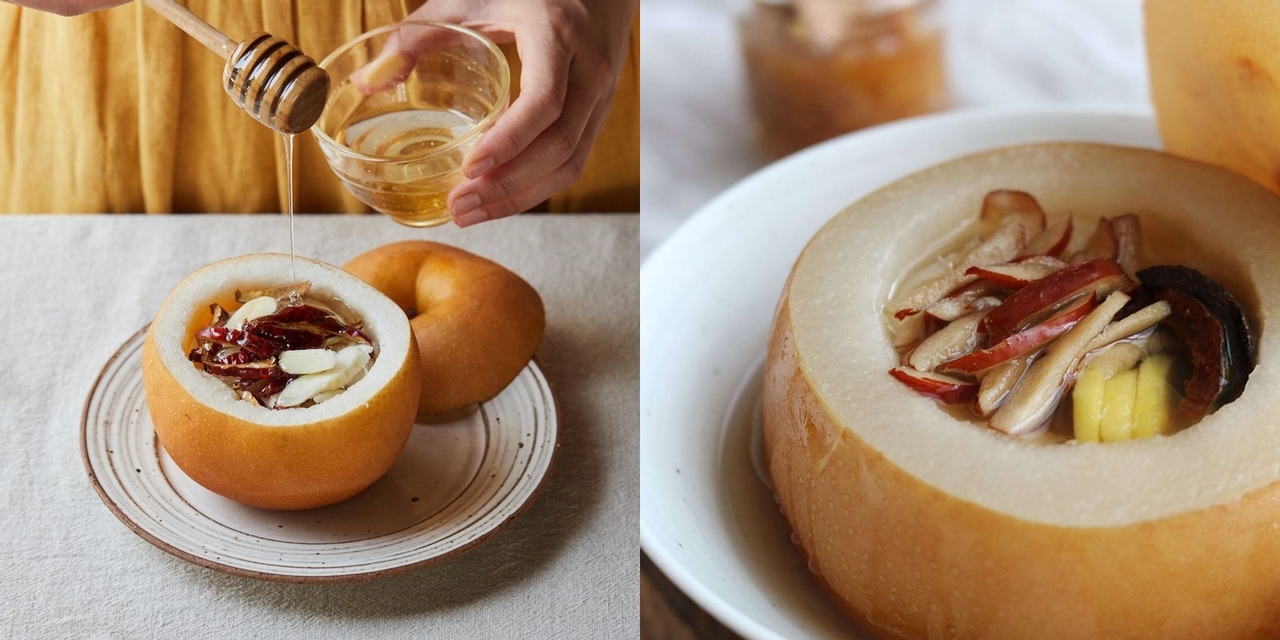
The dish is straightforward to prepare. Cut off the top of a pear to form a lid and hollow out the inside. Layer julienned jujubes, bellflower root and pear flesh inside the cavity. Spoon in ginger syrup and honey, then steam.
A microwave makes the process even simpler. Place the hollowed pear in a heat-safe container, fill it with the ingredients, replace the pear lid and cover the container with plastic wrap. Microwave for three minutes at a time, repeating three times — heating in stages works better than all at once.
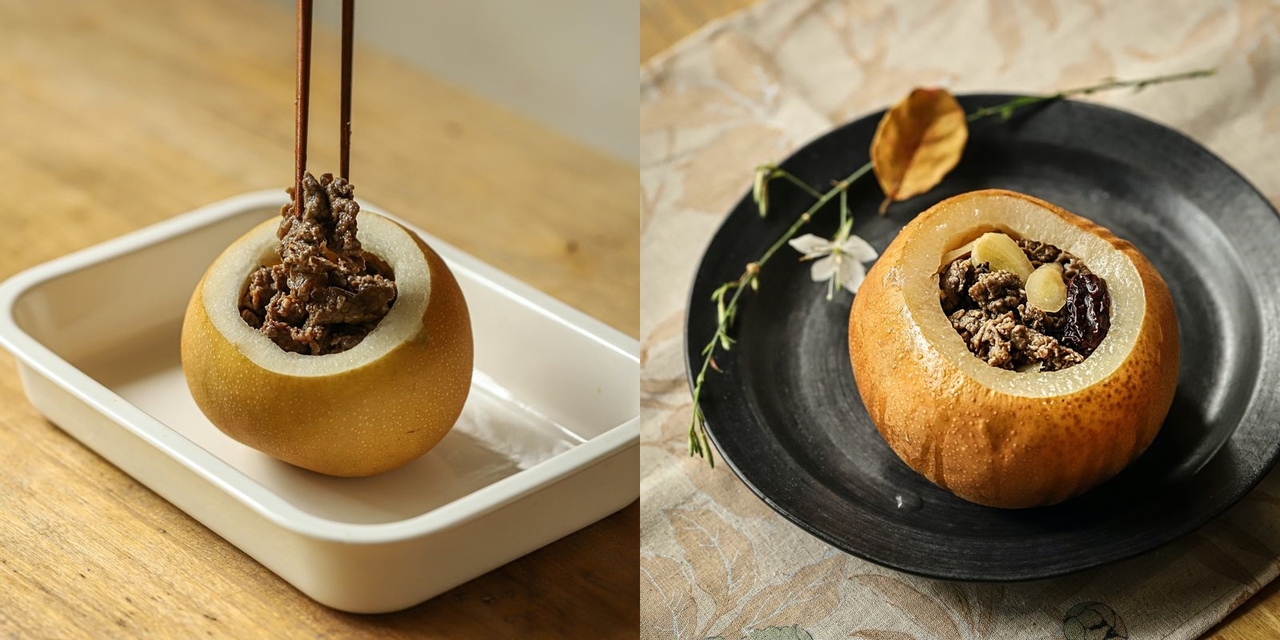
Bulgogi can be substituted for the ginger and honey filling. Bae bulgogi jjim — steamed pear stuffed with bulgogi — also works as an inventive hansik dish for Chuseok. The subtle sweetness of the bulgogi pairs surprisingly well with the warm, tender texture of the steamed pear.
To make it, marinate drained beef with grated pear and seasoning. Stir-fry the marinated beef in a lightly oiled pan over medium-high heat. Fill the hollowed pear with the cooked beef, bellflower root and jujubes. Cover with the pear lid and microwave for 10 minutes to finish.
gorgeous@heraldcorp.com