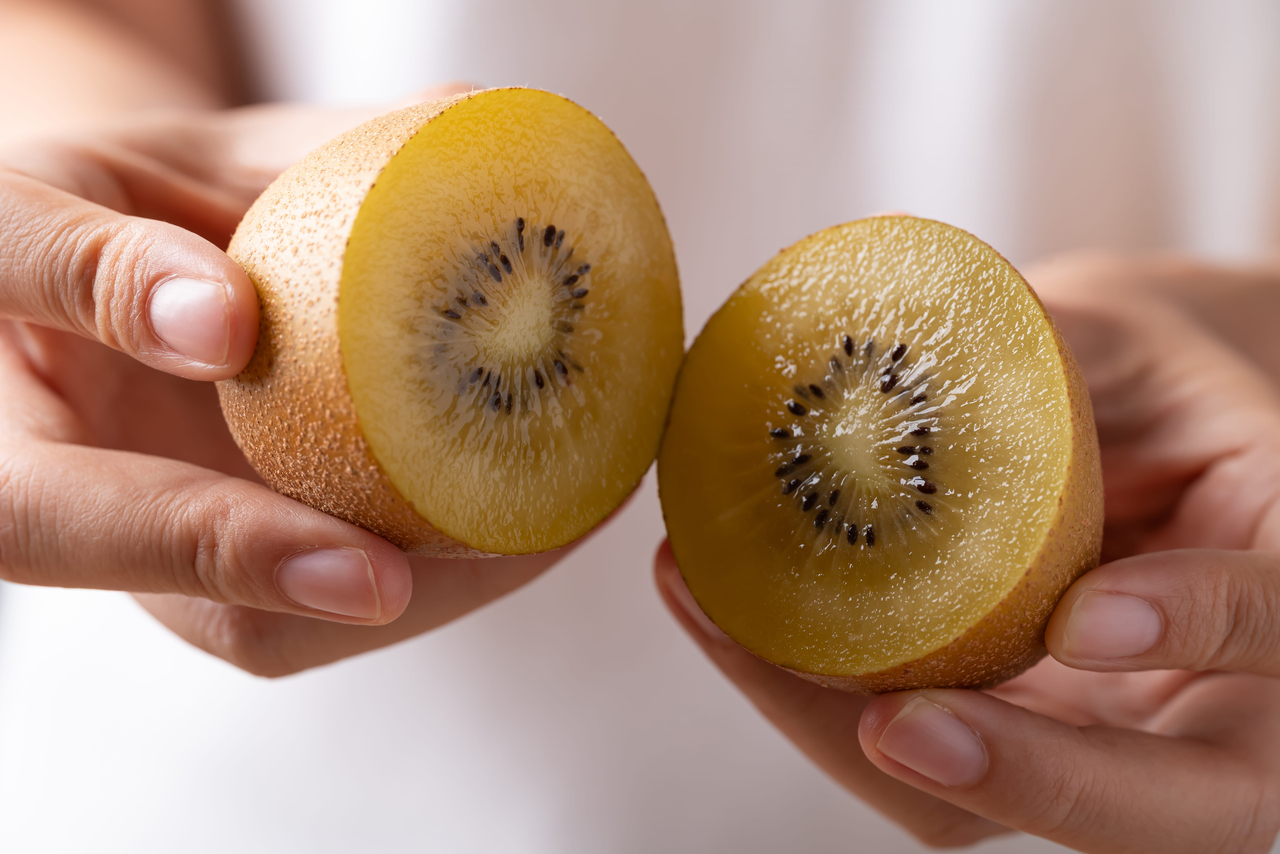
Kiwi packs a wide range of nutrients at high density while remaining low in calories and glycemic index despite its sweet-tart flavor.
According to nutritional data from the Ministry of Food and Drug Safety, green kiwi contains 61 kilocalories per 100 grams, while gold kiwi comes in lower at 55 kilocalories — roughly on par with apples at 52 kilocalories.
Both varieties qualify as low-glycemic foods. The glycemic index measures how quickly a food converts to glucose during digestion, with pure glucose set at 100; foods scoring 55 or below are classified as low-glycemic. Gold kiwi scores 48 and green kiwi 51, placing both firmly in that category.
Among its nutrients, vitamin C stands out. Green kiwi contains 81.4 milligrams of vitamin C per 100 grams — more than oranges (55.9 mg) or tangerines (30.6 mg).
Gold kiwi goes even further, at 122.6 milligrams. A single medium-sized gold kiwi weighing about 100 grams exceeds the 100-milligram daily recommended intake for adults set by the Ministry of Health and Welfare.
Vitamin C supports collagen synthesis, antioxidant activity and immune function. It also aids the absorption of non-heme iron found in plant-based foods, making kiwi a useful pairing with iron-rich vegetables. Eating kiwi as a dessert after a meal of beans, tofu or spinach, for example, can help the body absorb more of that iron.
Kiwi is also rich in dietary fiber — 2.6 grams per 100 grams in green kiwi and 2.1 grams in gold kiwi. Along with fiber, kiwi contains digestive enzymes that help improve gut health.
A study from the University of Nottingham's Biomedical Research Centre, published in Alimentary Pharmacology & Therapeutics in 2019, found that the dietary fiber and digestive enzyme actinidin in kiwi improve the intestinal mucus layer and gut environment, facilitating smoother bowel movements. A multinational clinical trial published in the American Journal of Gastroenterology in 2023 found that adults with constipation who ate two green kiwis a day for four weeks increased their average bowel movement frequency by 1.6 times per week and saw improvement in abdominal discomfort.
Kiwi also contains a range of other nutrients, including vitamin E (1.1 mg) and folate (82 micrograms).
Woo Chang-yun, a specialist in endocrinology and internal medicine and director of Wim Clinic, said at a talk concert hosted by kiwi brand Zespri on Wednesday at C Square in Gangnam-gu, Seoul, that "anyone living a modern lifestyle can experience nutritional imbalance" given habits such as skipping breakfast, relying on delivery food and consuming heavily processed products. He added that "rather than overhauling your entire diet at once, small steps — like gradually adding nutrient-dense natural foods such as kiwi — are more effective for building healthy eating habits."
gorgeous@heraldcorp.com