"In Joseon-era taverns and marketplaces, where electric rice cookers did not exist, vendors would place cooked rice in warm broth to keep it from spoiling, then serve it as gukbap. It was also a quick way for merchants to grab a meal. That practice gave rise to today's gukbap culture."
On Thursday, the Korean Food Promotion Institute opened the "Taste Routes, Connecting Regions" exhibition at its Hansik Culture Space Eum in Jongno-gu, Seoul. The permanent exhibition explores the regional development of hansik through three categories: gukbap, bibimbap and noodles.
Park Gyeong-hwa, a docent at the Korean Food Promotion Institute, said gukbap took root as a staple for merchants and travelers as markets and taverns multiplied in the late Joseon period. "The ingredients varied by region, but the underlying value was the same — a dish that could feed many people and sustain them for a long time," she said.
The most representative gukbap is seolleongtang from Seoul and Gyeonggi Province. Made by simmering beef bones and meat for hours, the broth was a "communal" dish meant to be shared among many.
In South Jeolla Province, Naju — a region known for its cattle markets — developed "Naju gomtang," a gukbap made with a clear, light broth. "Jeju momguk" is a dish traditionally eaten on Jeju Island during feasts and ancestral rites, made by simmering pork with seaweed.
"Busan dwaeji gukbap" emerged in Busan, which became a city of wartime refugees after the Korean War. Pork and offal were simmered for hours to produce an affordable, filling meal that could satisfy large numbers of people.
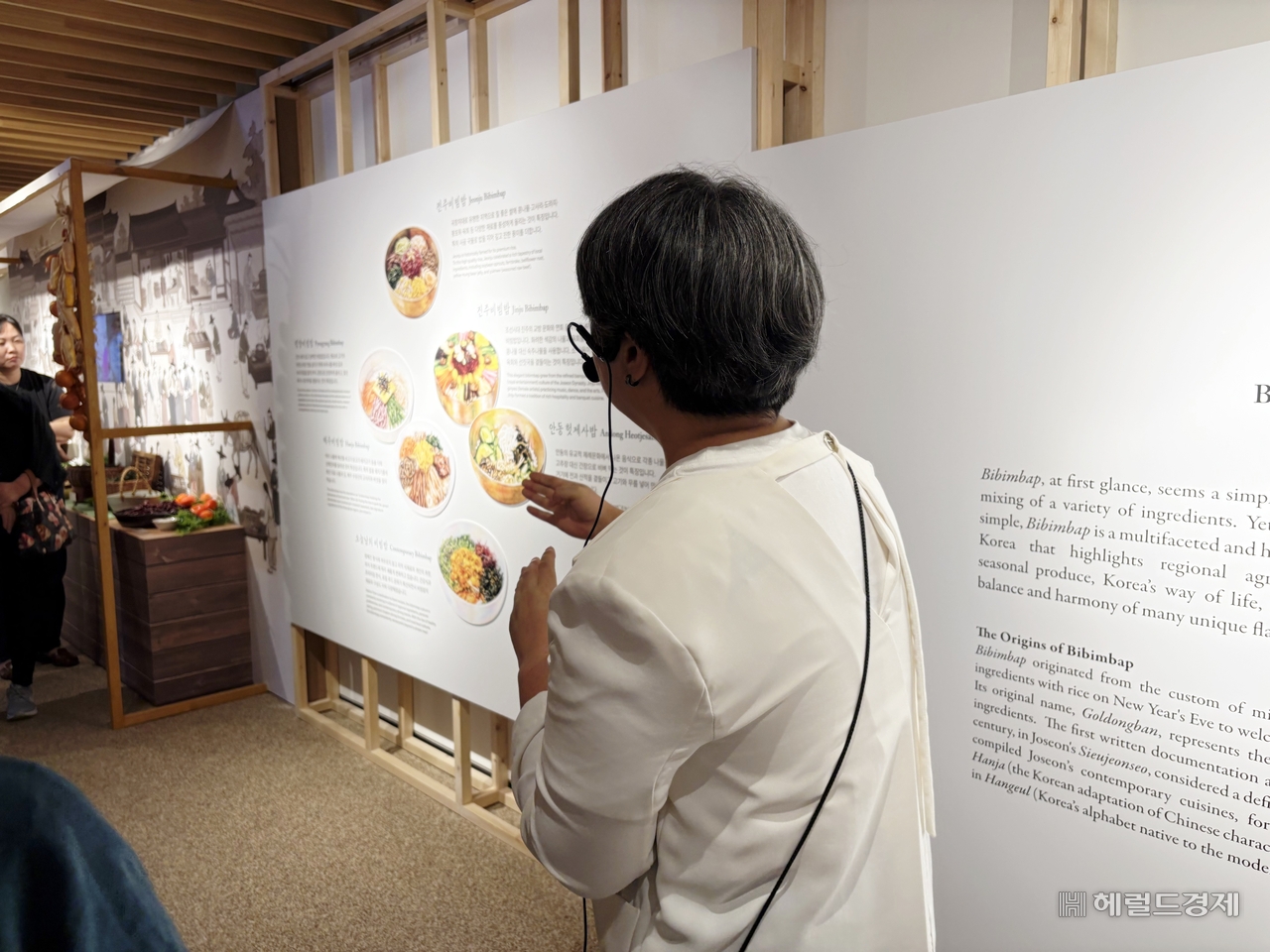
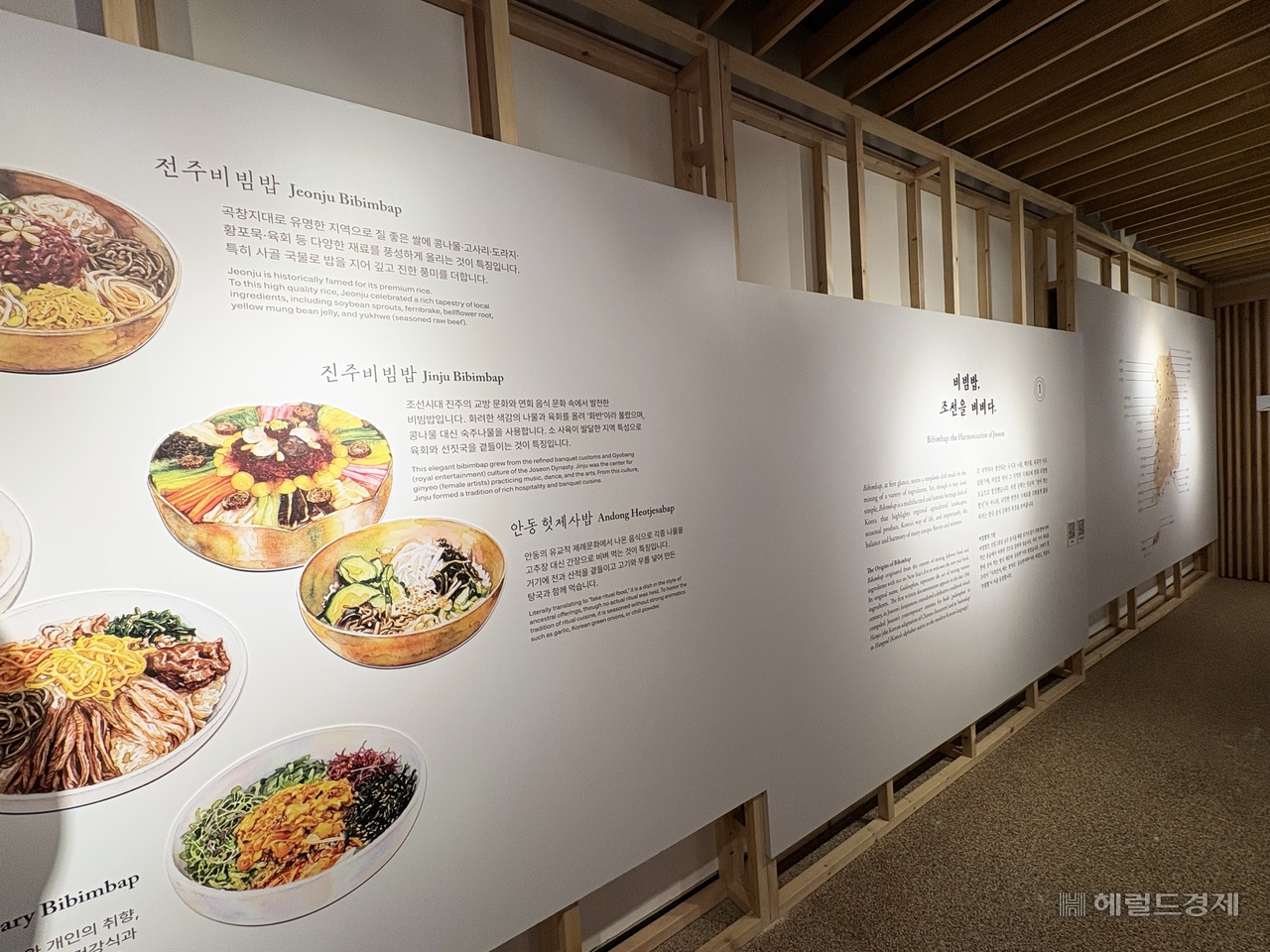
Bibimbap is believed to have originated from the custom of mixing leftover food into rice on the eve of the Lunar New Year to ensure nothing carried over into the new year. Park said each region put its own ingredients into the dish. "Jeonju is famous for its smooth, well-shaped bean sprouts, so they are always included in Jeonju bibimbap," she said.
"Jinju bibimbap" developed as a banquet dish. "In Jinju, cattle farming was well established, so yukhoe — raw seasoned beef — is a common topping, and the soup served alongside it is typically seonjitguk," Park said.
"Andong heutjesatbap" grew out of Andong's Confucian ancestral rite culture. Like food prepared for a jesa ceremony, it is made without strong spices such as garlic. It is also seasoned with soy sauce rather than gochujang.
"Pyongyang bibimbap" has a mild, understated flavor, much like Pyongyang naengmyeon. Its distinguishing feature is a topping of mung bean pancake.
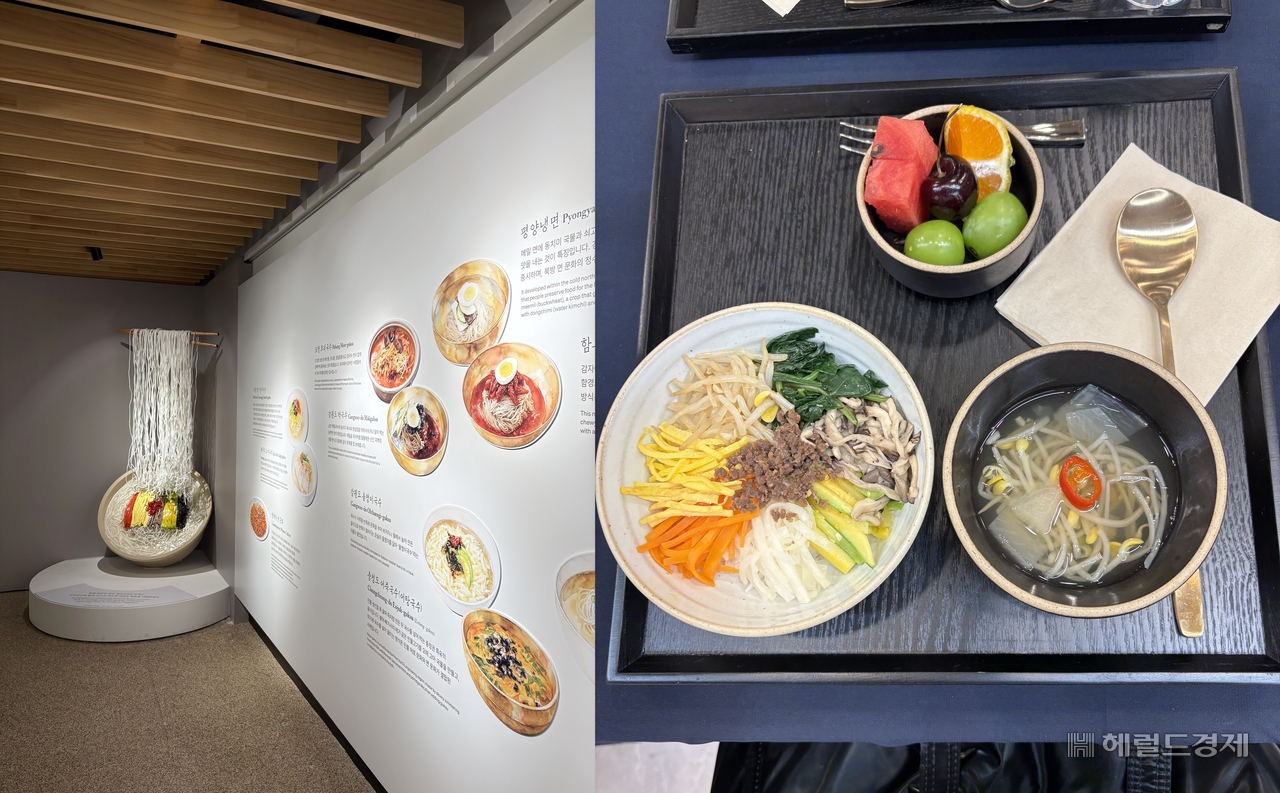
The exhibition concludes with a section on noodle dishes. Park said cold naengmyeon made with buckwheat and starch developed in the north, while warm, broth-based noodle dishes incorporating seafood took hold in the south and along the coasts.
After the Korean War, "Gyeongsang milmyeon" — noodles made from US aid flour — emerged. "Pohang moriguksu" is a thick, hearty dish made by boiling knife-cut noodles with fish, seafood, bean sprouts and seasoning paste. It warmed and sustained the fishermen and laborers of Pohang who worked at sea.
"Chungcheong eojuk guksu" is made by simmering the freshwater fish abundant in the Chungcheong region into a porridge-like base before adding noodles. "Jeju gogi guksu" reflects Jeju Island's pork-centered food culture.
Following the exhibition tour, visitors moved to Eum Studio on the second floor, where bite-sized servings of bibimbap and bean sprout soup were laid out. The bibimbap is also available free of charge to visitors who come to see the exhibition. It is offered in limited quantities of 100 servings per day.
Lee Gyu-min, president of the Korean Food Promotion Institute, said the exhibition captures "the journey through which different regional ingredients — mixed, simmered and boiled — came together to form Korea's distinctive flavors today." He added that local heritage foods embodying regional history and ingredients "are a resource for hansik," and described the exhibition as "a project that connects to the Local Heritage Food Promotion Center set to open in Mokpo, South Jeolla Province, next year."
gorgeous@heraldcorp.com