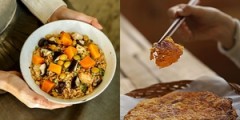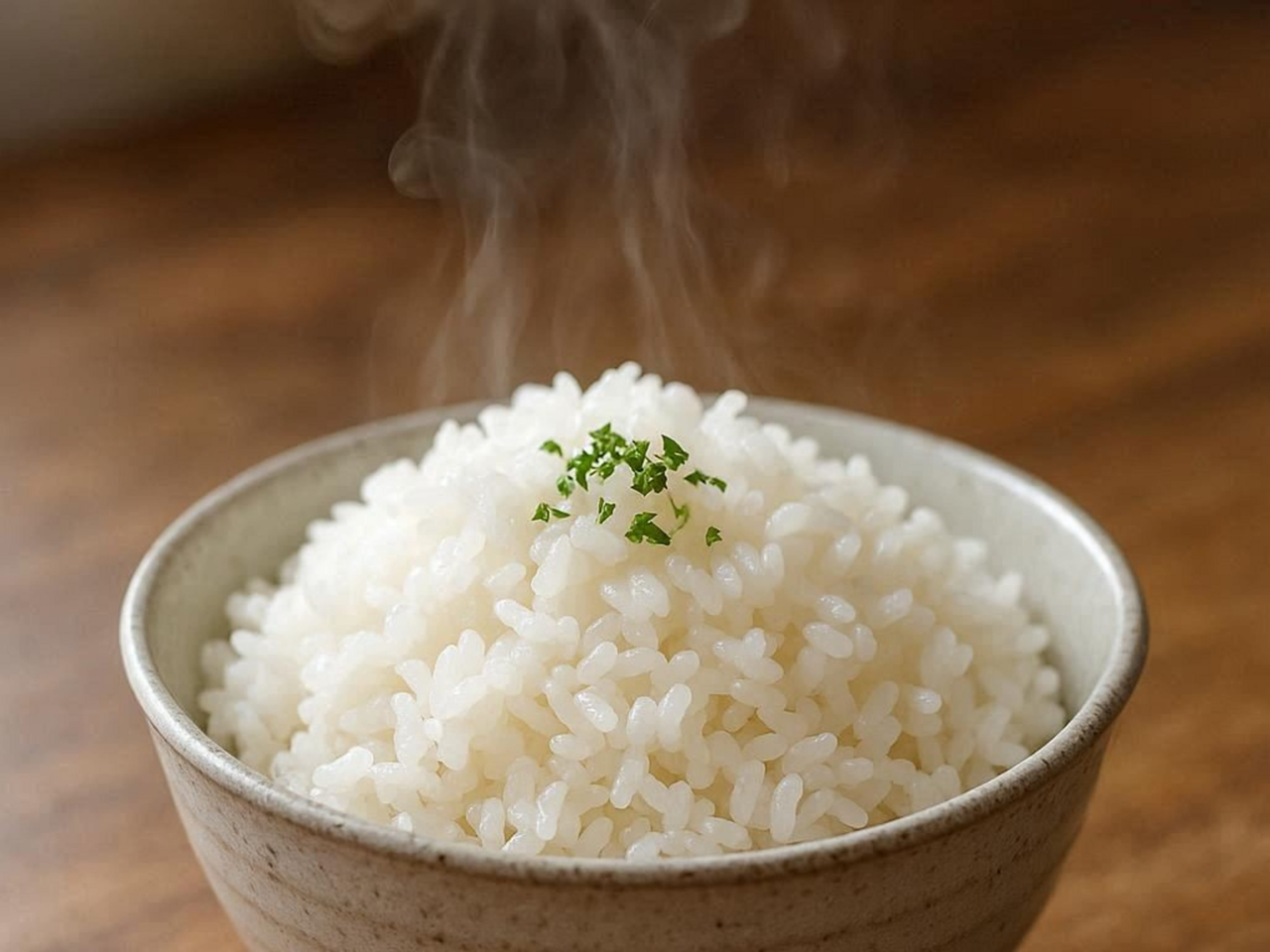
"Korean rice? It's glossy, and the more you chew it, the more a subtle sweetness comes through. Especially the white rice served in brass bowls at upscale restaurants — it's unlike anything you can taste anywhere else." So said Arabella, a 32-year-old British national who has lived in Seoul for two years.
Rice is at the heart of hansik. As the hansik boom spreads, international interest in Korean rice — the ingredient that defines the taste of a meal — is growing. Premium brands such as Icheon's Imgeum-pyo (King's Brand) rice, Andong yangban rice and Hapcheon's Yeongho Jinmi are gaining recognition as K-premium rice.
Korean rice exports are in fact rising. According to the Ministry of Agriculture, Food and Rural Affairs, private-sector rice exports over the past three years (2022 through November 2025) climbed from 3,565 tons to 6,308 tons, a 77 percent increase. The figure excludes overseas food aid using government-stockpiled grain and processed rice products.
According to the Rural Development Administration, the less sticky "indica" variety accounts for about 90 percent of rice grown worldwide and is consumed primarily in Southeast and South Asia and southern China.
Korean rice, by contrast, is mostly the "japonica" variety, prized for its stickiness and sheen. Among the main consuming countries — South Korea, Japan and parts of China — Korean rice stands out because japonica has been developed to best suit Korean food culture.
Jeong Jong-min, a researcher in the variety development division at the National Institute of Crop Science, said that because Korean food culture centers on "freshly cooked rice," breeders have consistently developed varieties with a soft texture and superior stickiness, sheen and flavor.
Japan, he said, differs in that variety development places significant weight on maintaining quality after the rice has cooled — as in dosirak lunchboxes or sushi. He added that the indica rice most common overseas "has a dry, fluffy texture well suited to fried rice or curry."
According to Icheon city in Gyeonggi Province, the premium brand Imgeum-pyo Icheon rice has signed an export contract to supply more than 228 tons to hypermarkets in the United States this year. It is the largest single-year volume since the brand entered overseas markets.
North Gyeongsang Province's Andong yangban rice has also entered the European market. Andong city said it plans to export a total of 100 tons by the end of this year.
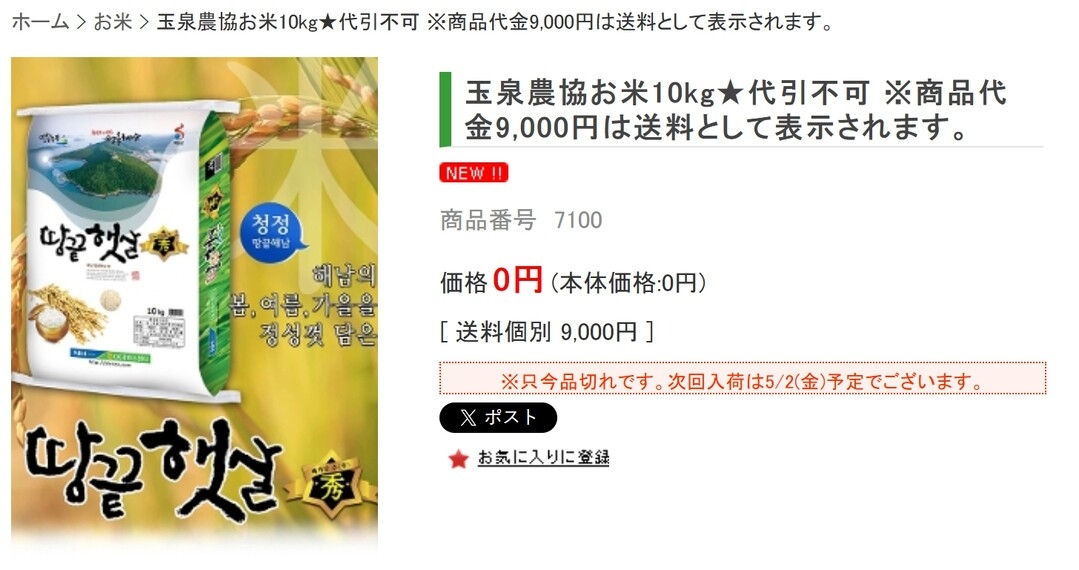
In South Jeolla Province, Haenam's Ttangkkeut Haetsal, Gangjin's Saecheongmu rice and Gokseong's Baeksemi are expanding into Japan, Southeast Asia and Europe.
South Gyeongsang Province's Hapcheon Yeongho Jinmi has recently drawn attention in connection with the first confirmed meteorite impact site on the Korean Peninsula. As the Hapcheon meteorite crater gained international exposure, the rice grown in the area attracted growing interest.
In April, "Communications Earth & Environment," a sister journal of Nature, featured a related paper by the Korea Institute of Geoscience and Mineral Resources. A popular science YouTube channel, GeologyHub, also covered the story, drawing further attention from viewers online.
Researchers confirmed that the Hapcheon meteorite crater was formed by a massive meteorite impact approximately 50,000 years ago. A vast lake formed after the impact, gradually filling with sediment to create the fertile basin landscape seen today — now one of South Gyeongsang Province's leading agricultural zones, known for producing high-quality rice. Some overseas observers have suggested that branding Hapcheon rice as "Space Rice" could turn it into a globally recognized tourism product.
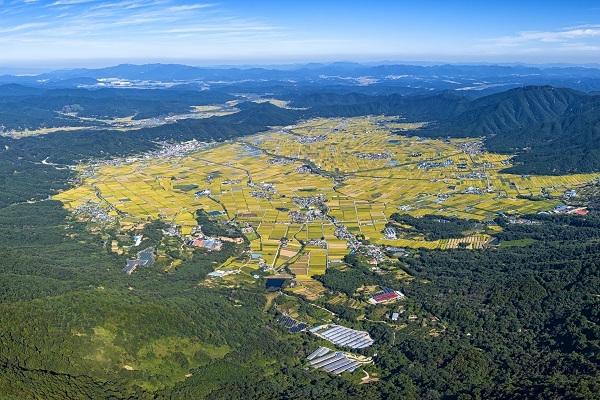
Kwon Yeong-ho, a researcher in the upland crop utilization division at the National Institute of Crop Science, said "the basin formed by the meteorite impact at Hapcheon accumulated organic matter over time, creating highly fertile soil" that "steadily supplies nutrients to rice plants throughout their growing season."
Hapcheon's Yeongho Jinmi, a flagship premium rice of the Yeongnam region, draws on a synergy between the fertile soil of the impact site and the variety's own superior characteristics. It won the Outstanding Variety Award (Prime Minister's Award) at the 2019 Korea Superior Variety competition.
Kwon said "Yeongho Jinmi heads slightly later than ordinary varieties," adding that "because the grains fill with nutrients in relatively cool temperatures, they ripen evenly, resulting in exceptional flavor."
Korean rice's competitiveness extends beyond regional premium products to include stable productivity.
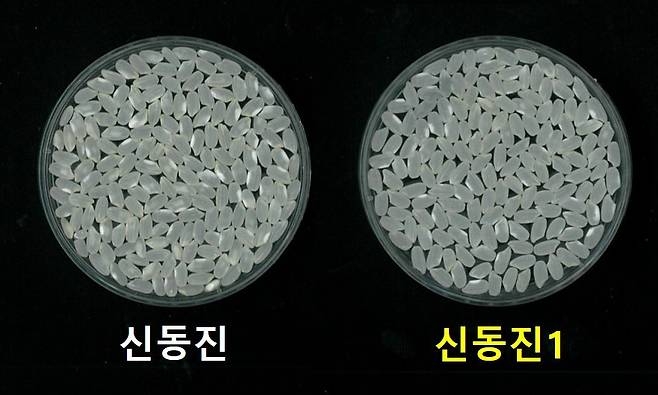
Sindongjin 1, one of the country's top-quality varieties, is a prime example. It is an improved variety developed 25 years after the original Sindongjin rice was introduced. The Rural Development Administration refined it to preserve the flavor Koreans love in Sindongjin while boosting resilience against the high temperatures and pests brought on by the climate crisis.
Jeong said the country "continues to develop new varieties that address cultivation stability and pest resistance in response to the climate crisis."
gorgeous@heraldcorp.com