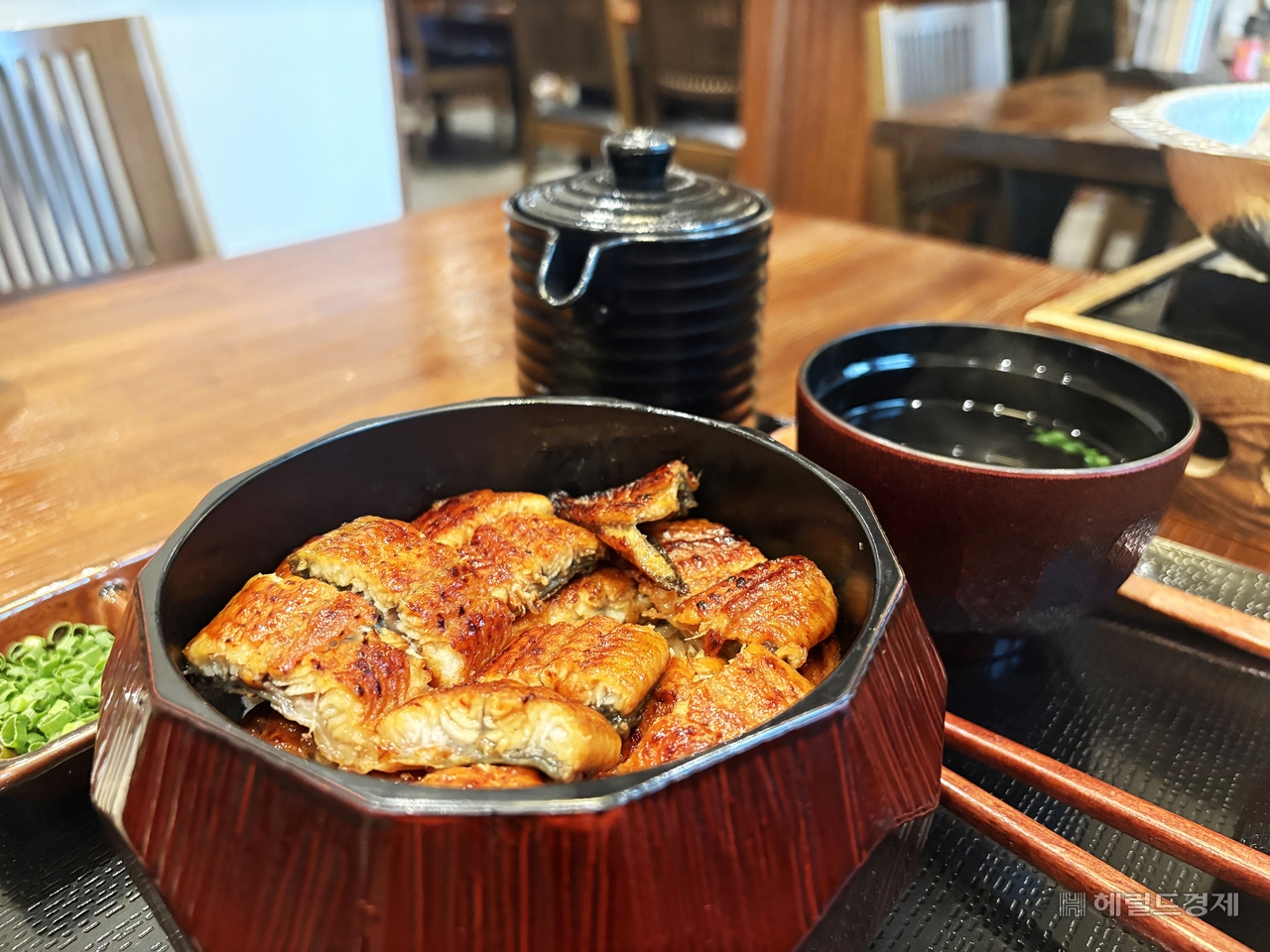
"People say bigger eel tastes better — but actually, smaller is better. You have to try a six-month-old young eel yourself to understand."
One bite, and it was hard to disagree. The eel was nothing like the thick, mackerel-sized cuts served at most Korean restaurants. Thinner, yet packed with a rich, nutty depth of flavor.
The restaurant is Unadai, in Samseong-dong, Gangnam-gu, Seoul. Even well past the lunch rush, tables were still full of diners working through their eel bowls. The store has also drawn mukbang ("eating broadcast") YouTube star Tzuyang, who last year posted a video of herself eating 10 eels there in a single sitting.
Unadai is an eel-cuisine franchise brand operated by Unadai Korea. Its signature dish is hitsumabushi, the eel rice bowl that is a specialty of Nagoya, Japan. The brand currently runs two stores in Nagoya and a Seoul location in Samseong-dong that opened in December 2024.
"The large eels Koreans typically eat salted and grilled usually run two per kilogram, but we use young eels that are four to a kilogram," said Ji Dong-gi, CEO of Unadai Korea. "The species is the Asian japonica, and we source only the top grade."
The hitsumabushi teuksang — a rice bowl featuring one whole premium eel — is priced at 36,500 won ($23). The company keeps costs down by handling imports and retail distribution in-house. The brand name itself, Unadai, means "eel for the masses" in Japanese, chosen deliberately to challenge the perception that quality eel is out of reach for everyday diners.
"Unadai's strengths are affordable eel prices through our own import and retail operations, a streamlined training system, and the ability to run a kitchen with a small team," Ji said. "The success of our Samseong-dong flagship store has allowed us to launch our franchise project in earnest."
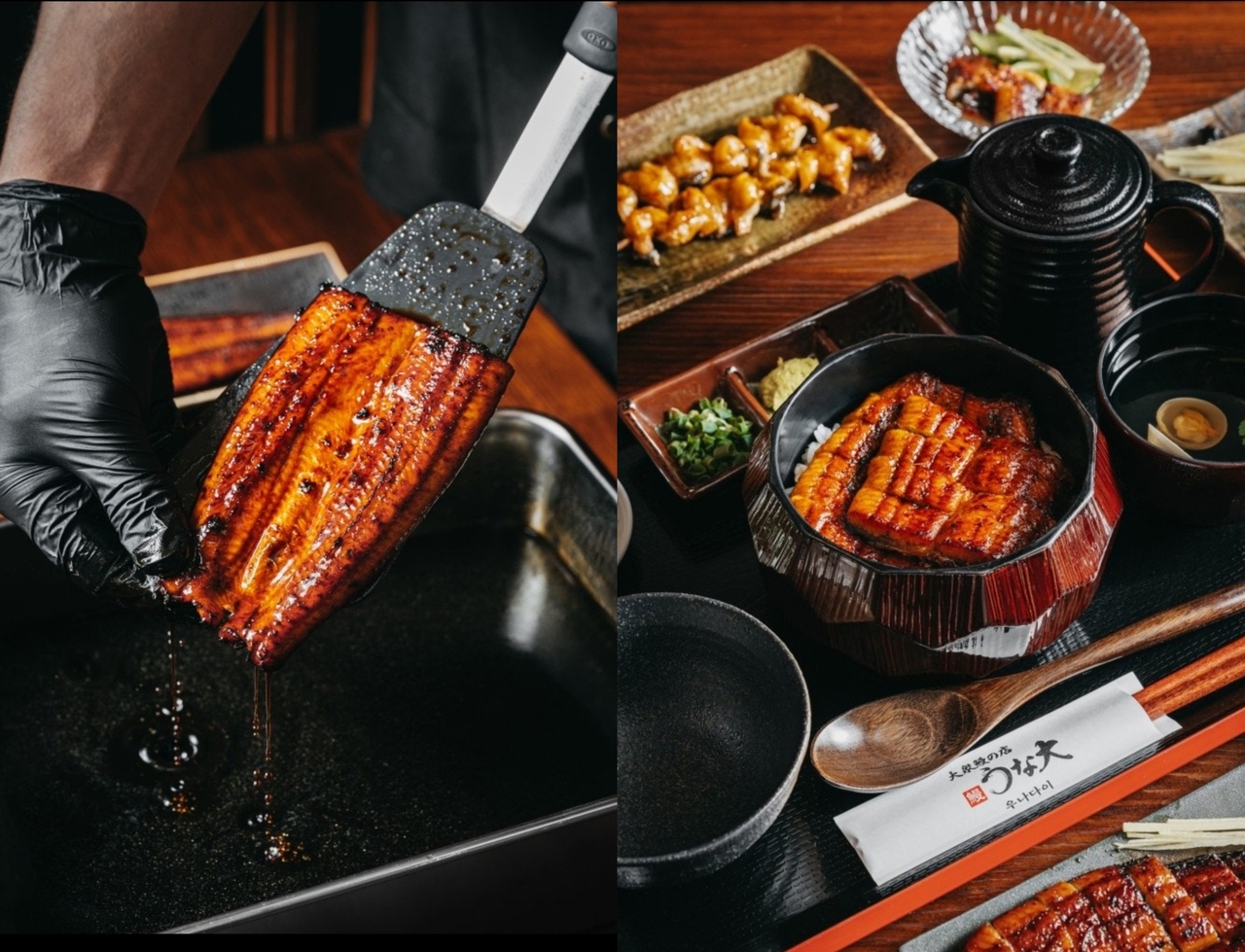
The eel arrived in a round wooden tub — the hitsu — and the fine bones of the young fish were visible, yet they dissolved in the mouth without any resistance. The secret lies in the cooking method. "Steaming the eel once and then grilling it two or three times makes the texture far softer and more flavorful," Ji said.
Using the same eel and tare sauce as the Nagoya original is another point of differentiation for Unadai. Diners in Seoul can taste an authentic hitsumabushi indistinguishable from what is served in Nagoya.
Tare is the Japanese soy-based glaze used for eel. Unadai's house tare involves dipping the grilled eel into the sauce at least twice, allowing the fat rendered during grilling to meld into the glaze and build a layered, complex flavor. "The eel itself has to be good, and then it comes down to the sauce," Ji said. "Even the finest eel will fail as a dish if the sauce is off."
Grilling is handled by a compound cooking oven the company developed in-house. "Every eel has a slightly different shape, so you have to adjust the cooking to match — otherwise you can't maintain consistent flavor," Ji said. "We vary the oven time for each eel."
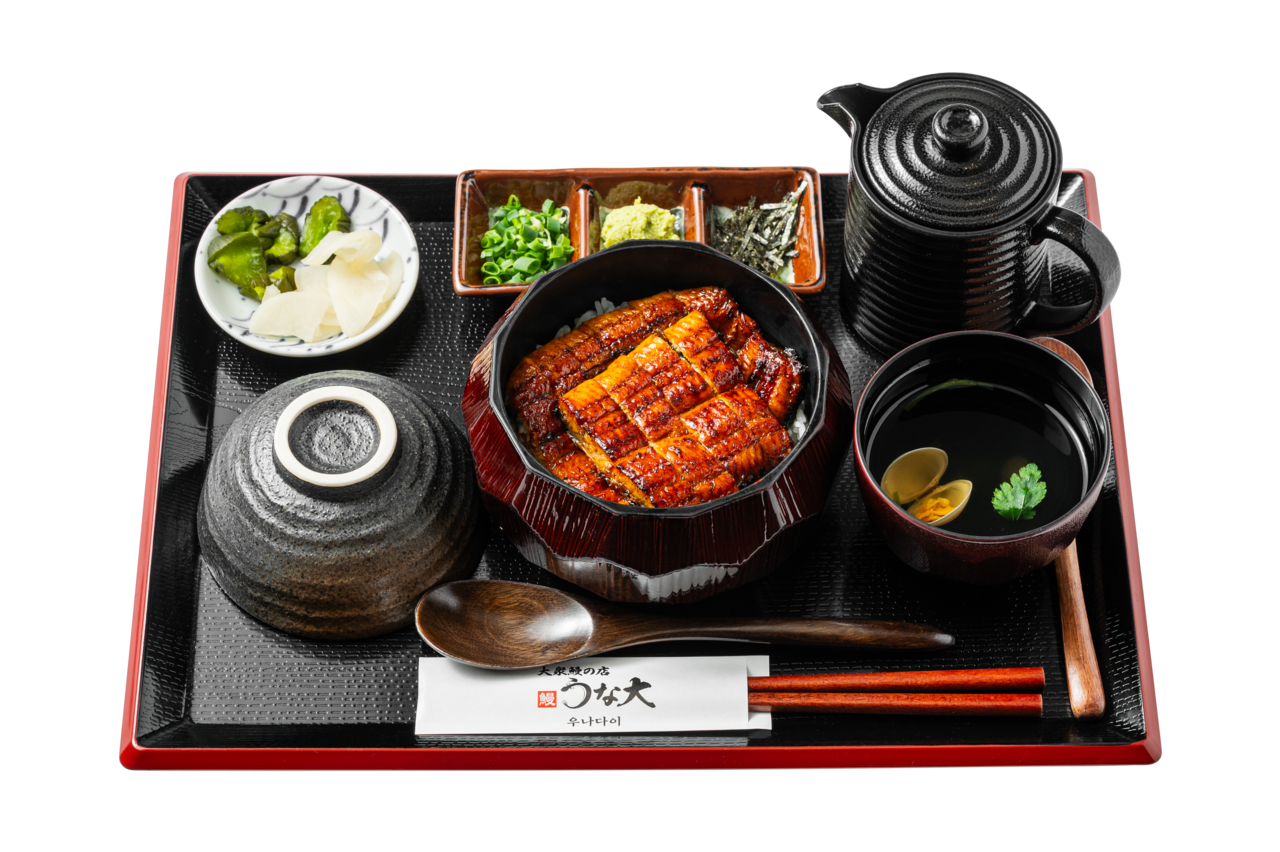
The dish is served in the authentic Nagoya style. Nagoya's hitsumabushi differs from the standard Tokyo and Osaka version, unagi-don, in one key respect: diners eat the same bowl three different ways using the accompaniments provided.
First, scoop the eel over rice and eat it as is — the purest expression of the eel's own flavor. Next, add the garnishes: green onion, dried seaweed and wasabi, whose sharp bite cuts through the eel's richness. A sprinkle of Japanese sansho pepper from the table is also an option; the Japanese variety is mild, adding a subtle fragrance rather than heat.
The final way is ochazuke-style — pour the warm dashi broth provided into the bowl and eat it like a Japanese home-style soup. The dashi, made from kelp, bonito flakes and anchovies, turns the remaining rice and eel into a light, satisfying finish.
Eel is a popular stamina food in summer, but it is equally good year-round. Beyond replenishing energy, it benefits eye health and skin. The fish is rich in protein, vitamin A and unsaturated fatty acids — and particularly high in omega-3, a nutrient many Koreans do not get enough of.
gorgeous@heraldcorp.com