'K-hiking' draws attention for accessibility and trail food culture
Manage blood sugar and hydration with nutritious snacks and cucumbers
Post-hike makgeolli is fine — but only after protein, and in small amounts

"Forget K-pop, K-food and K-beauty. There is another draw pulling foreigners to Korea — 'K-hiking' in the heart of the city." (South China Morning Post, 2025)
Seoul's hiking trails have been drawing growing interest from foreign visitors, thanks to two standout features: the remarkable accessibility of mountains reachable by bus or subway from the city center, and Korea's distinctive trail food culture. The South China Morning Post, a Hong Kong-based English-language newspaper, noted that "the Korean hiking culture of sharing cup ramyun and kimbap at the summit, then cooling off with makgeolli after the descent, is rapidly gaining popularity among foreigners."
Enjoying Korean trail food is part of the experience, but for those who hike regularly, knowing what to eat — and when — matters. Hiking is a moderate-to-high-intensity aerobic activity, and the right nutrition can make a real difference.
Song Ryu-ri, a sports nutritionist and head of Ryu Nutrition, said hiking burns 400 to 700 kilocalories per hour, and glycogen stored in muscles and the liver can begin to deplete within 90 minutes. "Blood sugar can drop sharply, and fatigue can set in," she said.
To prevent that, light snacks and hydration are essential. Song recommended eating "fast-absorbing carbohydrates in small, frequent portions" — such as dried persimmons, watermelon, bananas, yakgwa (a traditional Korean honey cookie) and granola bars. For convenience store options, she suggested fruit, boiled eggs, granola bars and electrolyte drinks.
A handful of almonds is also a good choice — a nutrient-dense, portable snack that quickly replenishes energy and essential nutrients.
Song advised drinking 100 to 200 milliliters of water every 20 to 40 minutes on the way up, and recommended water-rich foods such as cucumbers or cherry tomatoes.
Cucumbers are a classic hiking staple in Korea. With a water content of around 95 percent, they also help replenish minerals. "They restore fluids and minerals like potassium lost through sweat," Song said. "If dehydration exceeds 2 percent of body weight, endurance — the ability to keep walking and climbing for extended periods — begins to decline."

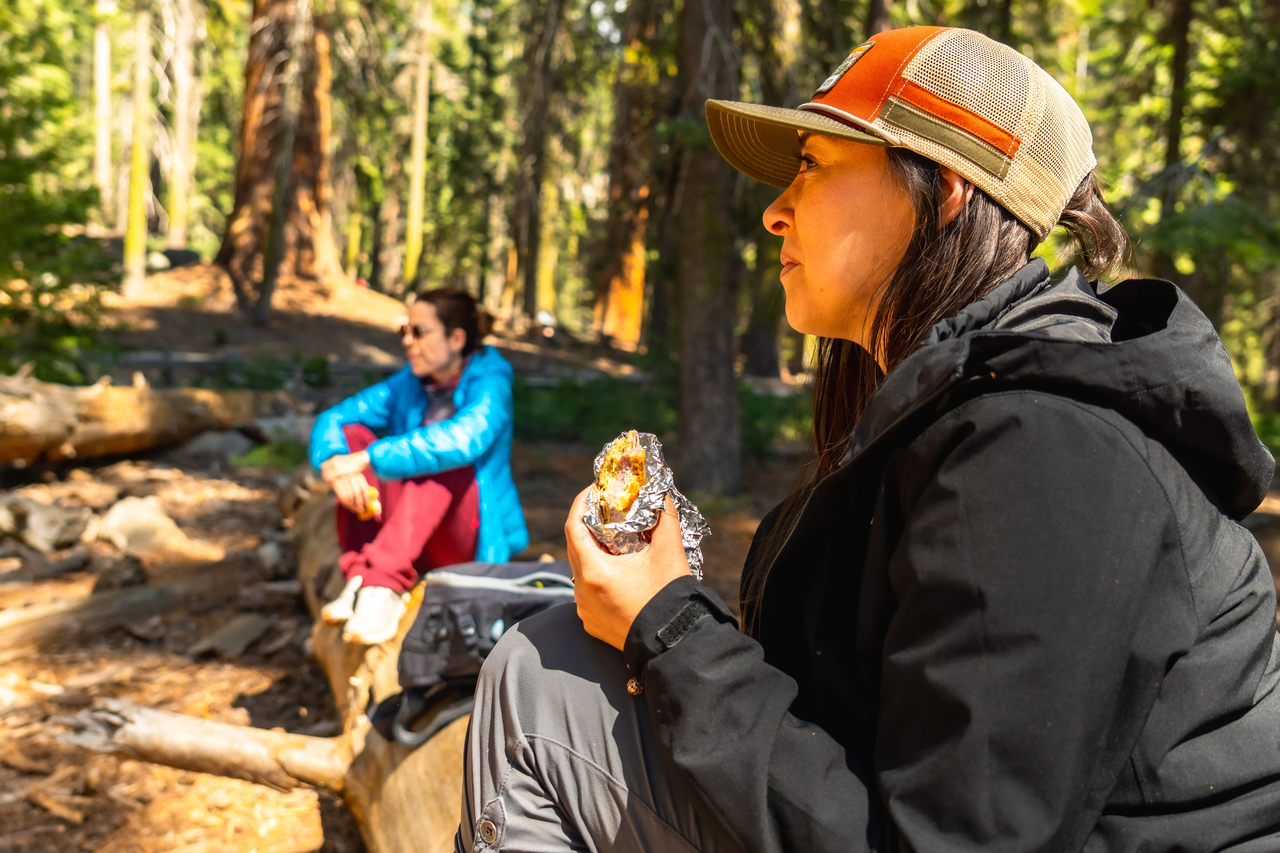
Kimbap is another common trail food, and while it is easy to carry, it is not ideal from a digestive standpoint. Cold ingredients, tightly packed rice and the tendency to eat quickly can all make it harder to digest. If you do eat kimbap on the mountain, chew more slowly and thoroughly than usual.
At the summit, Song said it is best to consume high-quality protein — tofu, boiled eggs or a protein bar. "Microtrauma to muscle fibers accumulates during the climb, so foods that promote muscle protein synthesis and speed up recovery are ideal," she said.
Some things should be avoided on the trail altogether. Alcohol — including makgeolli and soju — is off-limits during a hike due to the risk of accidents.
"A glass of makgeolli after coming down the mountain is a quintessential part of Korean hiking culture, but from a sports nutrition standpoint, some caution is warranted," Song said. She added that alcohol inhibits the protein synthesis needed for muscle recovery and interferes with the reabsorption of fluids lost through sweat. "If you want to enjoy makgeolli, drink enough water and eat protein first, then have only a small amount," she advised.
gorgeous@heraldcorp.com