Interview with Joe Moore, Bord Bia East Asia manager
Nation-led sustainability program 'Origin Green'
Dual audits by Bord Bia and independent bodies boost credibility
Korea entry in 2024, foothold expanding — 'galbi demand is strong'
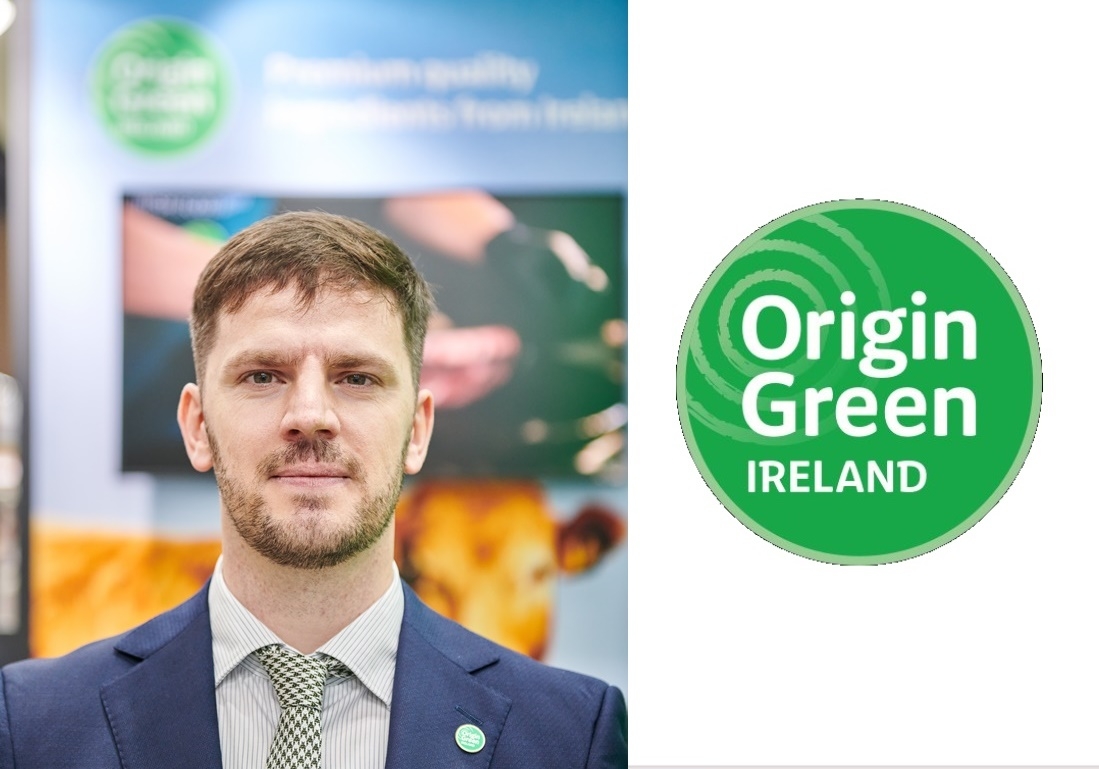
"Europe pays a lot of attention to sustainable systems in the meat industry. But no country has stepped in as directly as Ireland to build a systematic program covering the entire supply chain the way Origin Green does. That is why we take such pride in Irish beef."
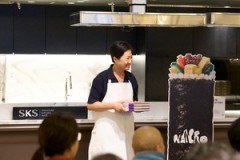
Joe Moore, East Asia global business development manager at Ireland's food promotion agency Bord Bia, made the remarks in an interview Wednesday at the KINTEX exhibition center in Goyang, Gyeonggi Province. Bord Bia participated in the 2026 Seoul International Food Industry Exhibition, which ran from Monday through Thursday.
Origin Green, which Moore highlighted, is a national food sustainability program operated by the Irish government. "It manages water usage, electricity consumption, gas emissions and social sustainability," he said. Currently, more than 95 percent of all cattle shipped from Ireland come from farms certified under SBLAS — the Sustainable Beef and Lamb Assurance Scheme.
"All the data is reviewed transparently by independent auditors, which is what makes it credible," he added. Sustainability production plans submitted by Bord Bia-approved companies are assessed by third-party bodies, which determine whether they pass. Some 120,000 livestock farms currently undergo audits once every 18 months.
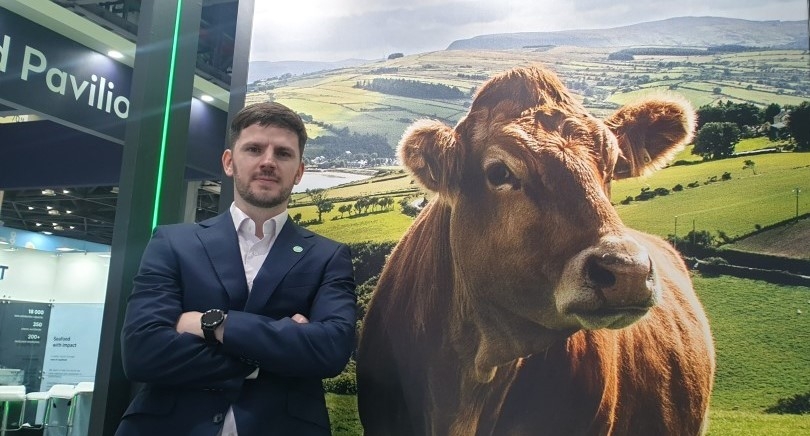
Moore cited quality alongside the sustainability program as a core competitive strength of Irish beef — quality he said stems from a grass-fed production system. "The maritime climate is ideal for grass growth, and cattle graze freely outdoors for an average of more than 233 days a year," he said. "When you raise cattle well, healthy and delicious beef follows naturally."
Ireland also uses the Paddock System, which divides pastures into sections for rotational grazing. "It is recognized as a systematic production method that maintains grass recovery and productivity," Moore said. "That natural production environment contributes to well-balanced marbling, tender texture and rich flavor."
About 90 percent of the beef produced is exported, with the United Kingdom as the top destination. Korea opened its market to Irish beef imports in 2024, marking the start of a full-scale push there. Exports to Korea in 2025 reached approximately 370,000 kilograms — a 1,064 percent increase from the previous year. The focus for now remains on business-to-business trade.
"We have been expanding our market presence in Korea rapidly since entry," Moore said. "Korean consumers will get to experience the distinct taste of Irish beef as a new imported-meat option."
Beyond steaks, Moore sees strong potential for Irish beef in hansik, or Korean cuisine. Galbi is in particularly high demand in Korea. "We recently worked with Chef Laymon Kim to make braised galbi with Irish beef, and it turned out delicious," he said, adding that the beef also pairs well with bulgogi, yukhoe jeon and yukgaejang.
"The Irish and Korean governments are continuing various forms of cooperation on food exports," Moore said. "We are mapping out long-term strategies — including supply chain expansion — to make Irish beef more accessible to Korean consumers."

gorgeous@heraldcorp.com