Rich in taurine, daseulgi may support liver recovery — but collectors face real drowning risks, and the snails must be fully cooked to avoid lung fluke infection

Among June's seasonal seafood is daseulgi, a freshwater snail found only in pristine, first-grade waterways. The small mollusks thrive in clear, cold water with strong currents — conditions that make collecting them increasingly hazardous as early summer arrives.
Daseulgi inhabit rivers and mountain streams and are easy enough for beginners to catch, but shallow-looking water has repeatedly claimed lives when collectors let their guard down. The National Fire Agency recorded 59 rescue operations involving daseulgi-related water accidents from June through August between 2022 and 2024, with 14 victims transported to hospital in cardiac arrest. In South Jeolla Province alone, eight people drowned while collecting daseulgi over the past decade, from 2016 to 2025.
Clear streams and valleys can appear shallow while concealing sudden drops and powerful currents. Daseulgi tend to congregate in precisely those stretches, meaning collectors can be swept away in an instant.
There is another hazard to keep in mind: daseulgi carry a risk of lung fluke infection and must never be eaten raw. According to the Korea Disease Control and Prevention Agency's National Health Information Portal, paragonimiasis — lung fluke disease — is most commonly contracted by eating daseulgi, crab or crayfish raw or undercooked. The lung fluke parasitizes the lungs and can cause complications including pneumonia and pulmonary abscess.

Handled and prepared with those two precautions in mind, daseulgi are a flavorful and nutritious food, particularly valued for supporting liver recovery. The snails are rich in amino acids and taurine, which promotes bile secretion and helps the liver function smoothly. A domestic animal study published in the Korean Journal of Environmental Biology in 2018 found that oral administration of daseulgi extract (300 mg/kg) for five days reduced liver-damage markers in injured mice to levels comparable to the control group.
Garlic chives make an ideal pairing. The vitamin C in the chives boosts absorption of the iron found in daseulgi. Traditional Korean medicine also considers the two foods complementary: the chives' warming properties are thought to balance the snail's cooling nature, allowing the body to absorb nutrients effectively without added strain.
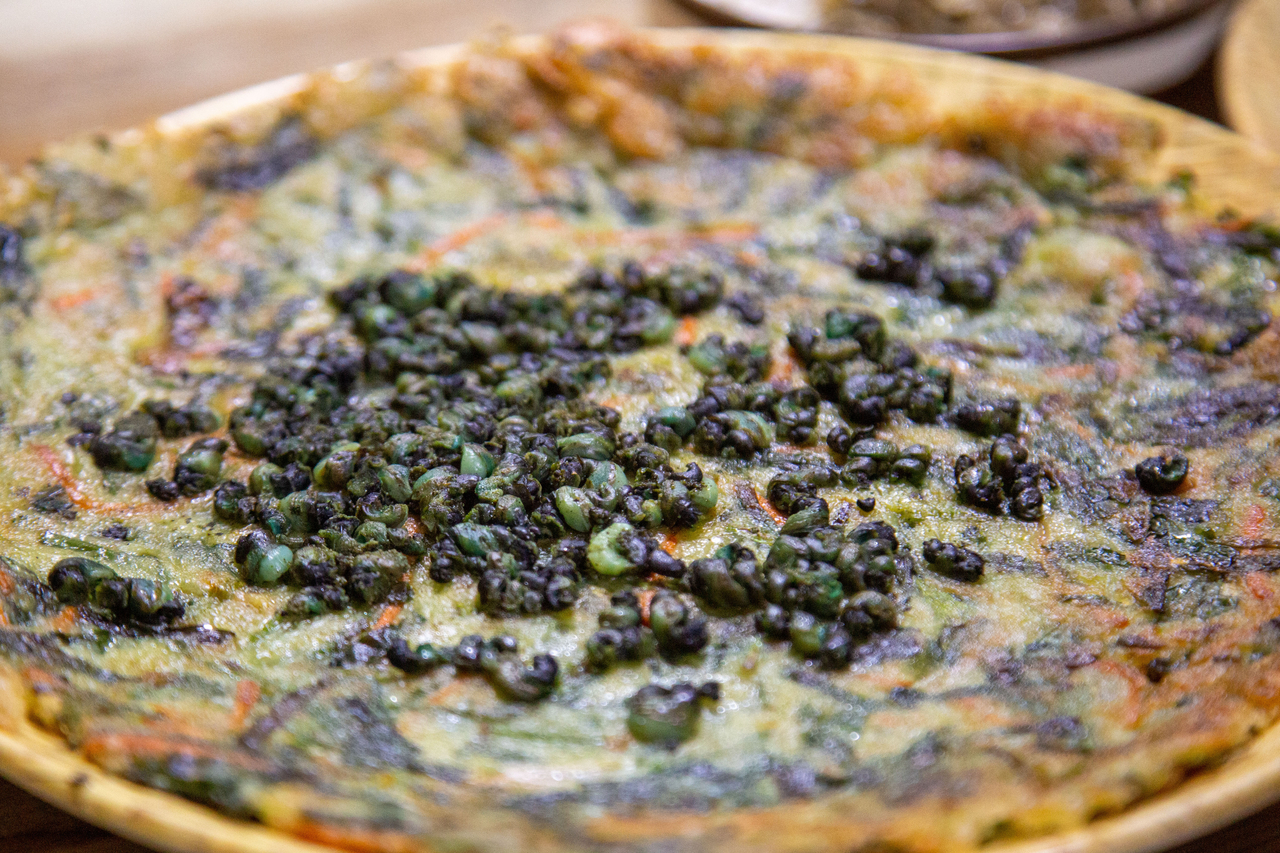
In daseulgi soup, adding garlic chives at the end preserves their fragrance — a technique central to "olgaengi-guk," the dish's name in the Chungcheong dialect. The soup is made by dissolving doenjang in the broth and simmering the snails with garlic chives and mallow. Daseulgi also appear in savory pancakes, mixed with boiled snail meat and chives in a flour batter, and in seasoned salads where chives are tossed in with the dressing.
Before cooking, the snails need to be purged to remove grit and impurities from their digestive tracts. Rinse them under running water, cover with water, drape a sheet of newspaper over the bowl and leave for about three hours. Once purged, pour boiling water over the snails and immediately transfer them to cold water to rinse — the hot water makes it easier to extract the meat from the shells.
gorgeous@heraldcorp.com