MSC and DearOcean co-host East Asia Sustainable Seafood Forum
South Korea's seafood production and retail landscape is set for significant change ahead of the implementation next year of the Act on the Development of Sustainable Coastal and Offshore Fisheries. Securing catch traceability and supply chain transparency is emerging as a key factor in market competitiveness.
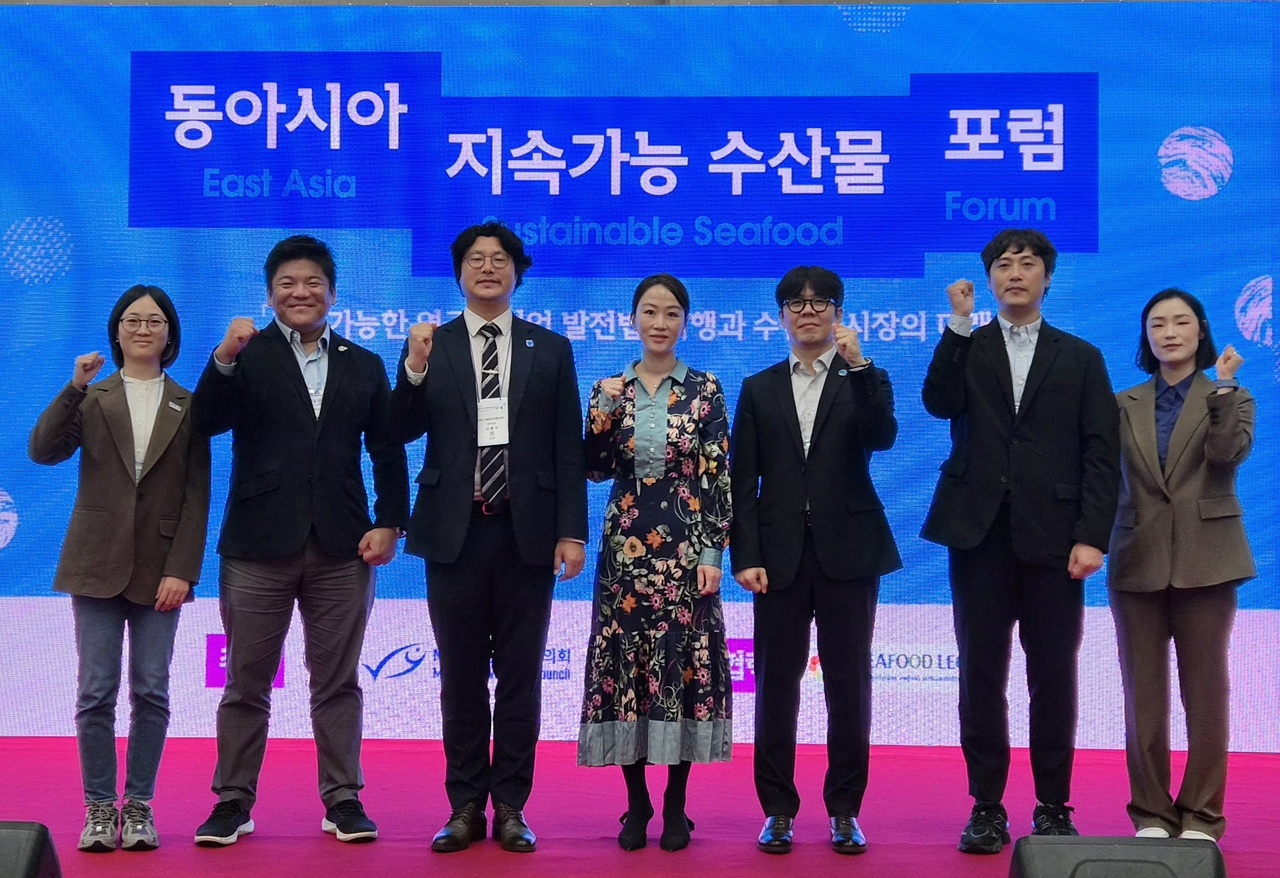
The Marine Stewardship Council's Korea office and DearOcean co-hosted the East Asia Sustainable Seafood Forum on Thursday as a side event of the 2026 Busan International Seafood & Fisheries Expo at Bexco in Busan. About 60 industry representatives from South Korea and abroad attended to examine how the sector should respond to the incoming law.
The law was promulgated on June 16 this year and is set to take effect on June 17, 2027. Under the legislation, coastal and offshore fishers will be required to report their daily catch, land their haul at designated unloading sites, and provide a catch certificate when supplying seafood to distributors. The measures will strengthen a management framework that tracks catch information and transaction records from production through retail.
Catch records are also set to carry direct financial consequences. A fisher's catch performance over the past three years will be factored into the allocation of total allowable catch quotas, making accurate documentation important not only for day-to-day operations but for the long-term viability of fishing businesses.
Shim Seong-hyeon, an associate research fellow at the Korea Maritime Institute's fisheries research division, said at the forum that documentation would become as important as fishing skill itself. "In coastal and offshore fisheries, recording and proving your catch will matter just as much as catching well," Shim said. "What counts is not saying you caught a lot, but having the data to prove exactly how much."
The forum also highlighted retail evidence of demand for certified sustainable seafood. Megamart sold 17 product lines carrying MSC or ASC-MSC seaweed certification — 12 MSC-certified and five ASC-MSC seaweed-certified — from 2023 through October this year, recording cumulative sales of about 1.31 billion won ($977,000) and roughly 152,000 units sold. However, a shortage of certified domestic coastal and offshore species means retailers are still building their certified product ranges largely around imported seafood, a challenge the industry has yet to resolve.
Park Du-hyeon, Korea fisheries director at Ocean Outcomes, said the lack of transparency in South Korea's seafood supply chain was a pressing concern. South Korea is one of the world's largest seafood consumers, yet traceability for imported seafood remains at the country level rather than the fishing-unit level. Stock assessment data for major domestic species such as mackerel, hairtail and swimming crab are not sufficiently disclosed to allow a clear picture of resource health, and no major retailer has yet made a formal commitment to sustainable seafood sourcing. Park said retailers, brands, processors and traders would need to move together to improve the supply chain.
Seo Jong-seok, head of the MSC Korea office, said transparency in the catching process and responsible fisheries management were gaining recognition as new sources of competitive advantage in the seafood market. "The time has come to create conditions where the efforts being made on the water for sustainable fishing can be recognized for their value in the market and translated into consumer trust," Seo said.
gorgeous@heraldcorp.com