Rich in vitamin C and dietary fiber, with a satisfying crunch, lotus root works in salads, nuggets, pickles and beyond
If lotus root has only ever made it onto your table as a braised banchan, it may be time to rethink the ingredient. Sliced thin, it adds crunch to salads; ground up, it can be shaped and fried into nuggets.
The appeal of lotus root in cooking lies in its crisp texture, which makes it a natural fit for salads. It pairs particularly well with a nutty black sesame dressing.
It also works as a banchan on its own. Blanch the lotus root briefly, drain it well, then toss it in a black sesame sauce made from ground black sesame, mayonnaise, honey, lemon juice and peanut butter.
Grinding lotus root finely opens up even more possibilities, with lotus root pancakes and lotus root nuggets among the most popular results.
To make lotus root nuggets, cut the root into cubes and blend them in a mixer with one whole garlic clove — aim for a coarsely chopped texture rather than a smooth paste, which gives the nuggets better bite. Mix in salt and frying powder, then scoop the batter by the spoonful into hot oil and fry for three to four minutes until golden.
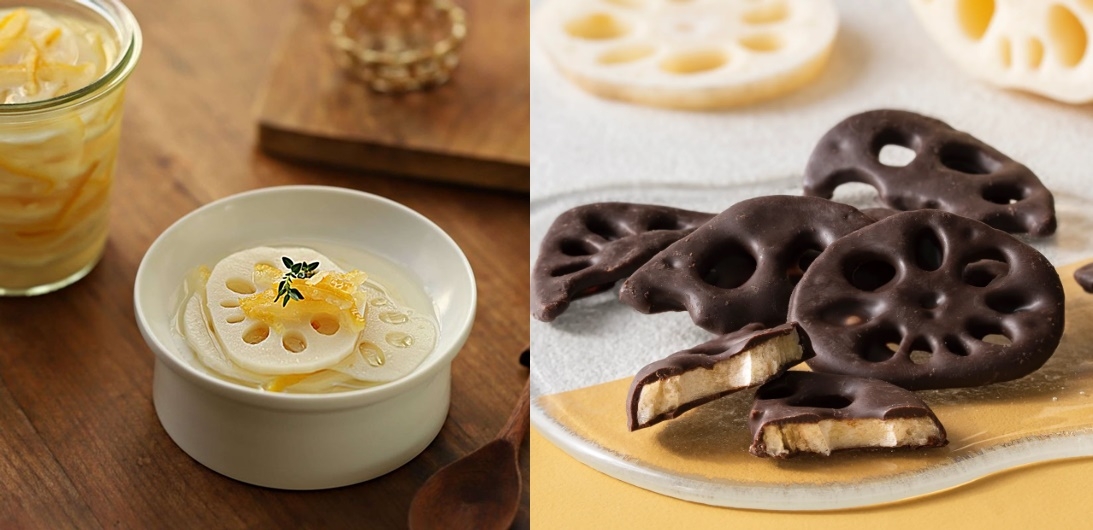
Lotus root also lends itself to pickling, a trend that has gained traction abroad. The combination of lotus root and yuzu makes a bright, tangy pickle. Using yuzu marmalade prepared from the fruit — which comes into season in autumn — produces a crisp, sweet-and-sour result.
To make lotus root yuzu pickles, blanch thinly sliced lotus root in vinegar water for about two minutes, rinse under cold water, drain and pack into a sterilized jar. Bring the pickling liquid — water, vinegar, yuzu marmalade and salt — to a boil, pour it over the lotus root and seal the jar. Let it cool slightly, then refrigerate for at least a day before eating.
Lotus root is increasingly finding its way into snacks and desserts as well, from chips to chocolate. In March, Godiva Japan collaborated with Iwakuni city in Yamaguchi Prefecture to release an Iwakuni lotus root chip chocolate — thinly sliced lotus root, fried and coated in dark chocolate.
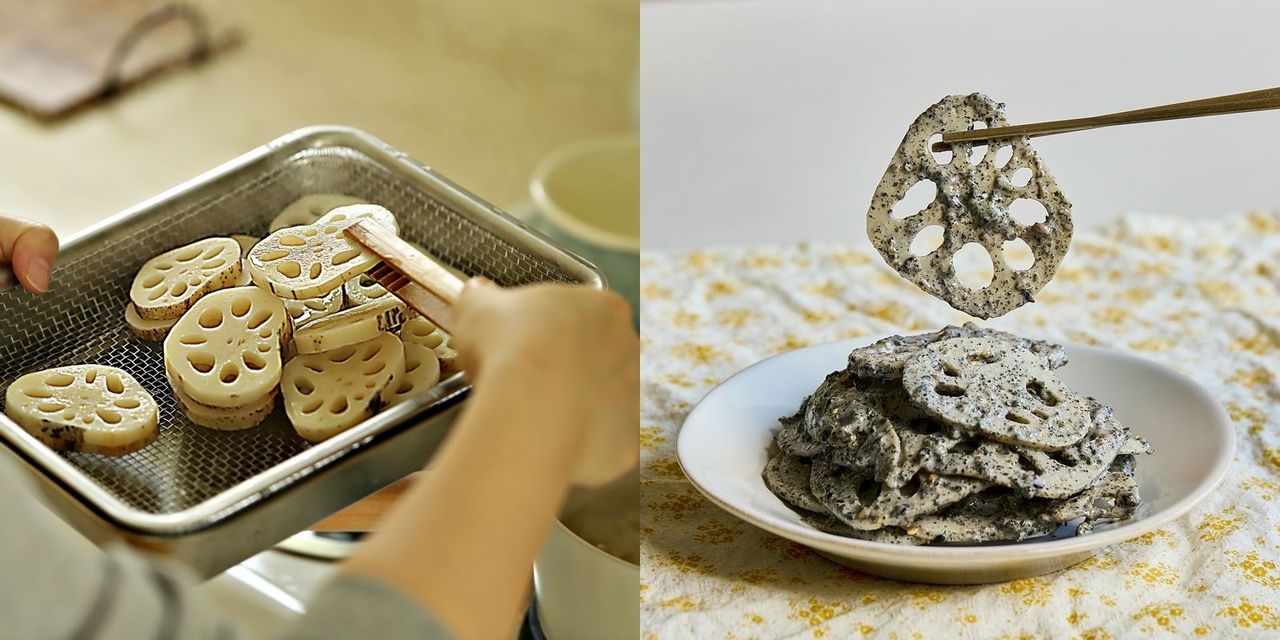
When preparing lotus root, preventing browning and removing any astringency are the two key steps. Both can be handled with vinegar: submerge the root in water, add one tablespoon of vinegar and soak for five to ten minutes, then drain and rinse under running water.
Leftover lotus root can be stored the same way — keep it submerged in vinegar water (1 liter of water to one tablespoon of vinegar) in the refrigerator. It will keep for about three to four days.
Lotus root is the ingredient of the month for October, as designated by the Rural Development Administration's farming information service. Despite its name suggesting a root, the part we eat is technically an underground stem.
It is a good source of vitamin C, dietary fiber and potassium. According to nutritional data from the Ministry of Food and Drug Safety, 100 grams of raw lotus root contains 28 milligrams of vitamin C, 3.3 grams of dietary fiber and 478 milligrams of potassium.
gorgeous@heraldcorp.com