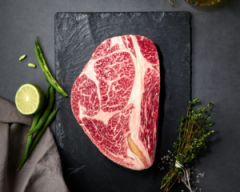
"No cucumbers, ranch dressing, medium-cooked meat, and a sunny-side-up egg, please."
"Just give me the house special."
The contrast captures a fundamental difference in how Westerners and Koreans approach ordering food. In the West, many diners prefer to customize their meals — much like building a sandwich at Subway. Koreans, by contrast, tend to judge a restaurant by its signature dish, valuing a harmony of flavors over a single dominant taste and communal dining over individual preference. Observers say this cultural character is now driving a global wave of culinary hallyu.
Hansik has moved beyond simply gaining name recognition abroad. It is now drawing attention as a serious culinary tradition on par with French cuisine. French daily Le Monde wrote in 2025 that "culinary hallyu is spreading rapidly across the world."
International media have also turned a spotlight on fine-dining hansik. CNN covered the global culinary standing of Korean food through Mingles, a Michelin three-star restaurant, in July. The New York Times praised Okdongsik, a pork gomtang specialist that won over New York diners, and in May ranked Meju — a hansik restaurant that uses Jeju sea soy sauce — fourth on its list of the top 100 New York restaurants for 2026.
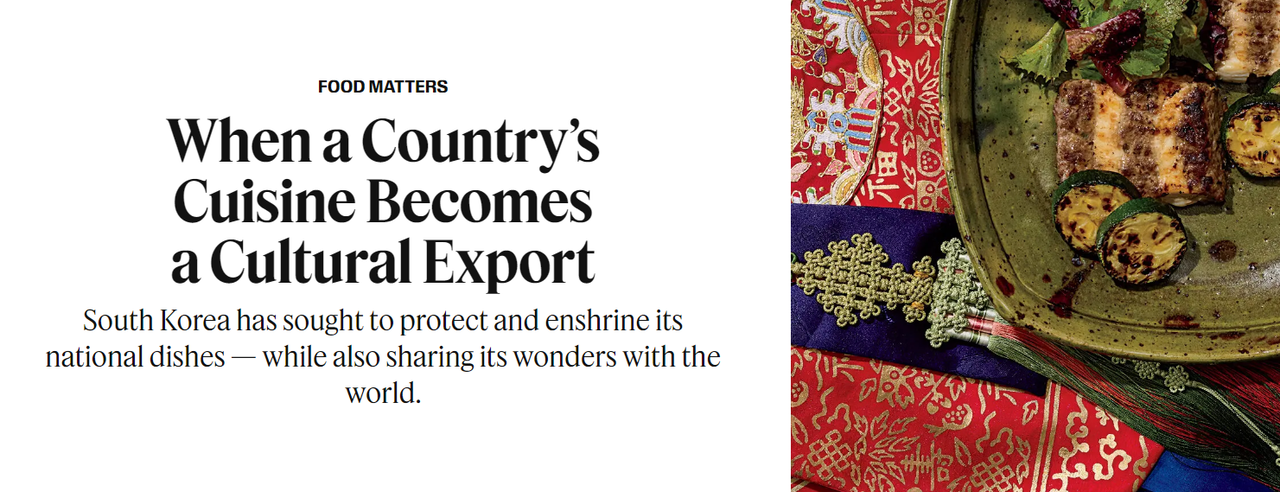
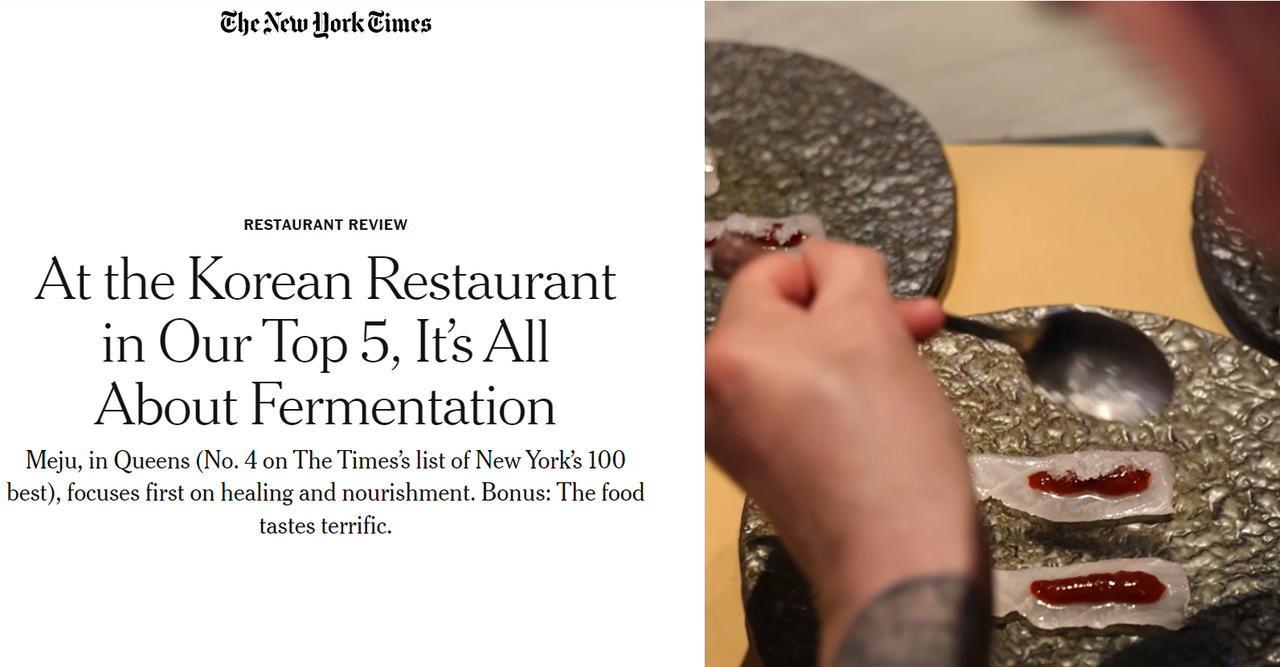
Song Mi-hwa, a director at the Korean Food Promotion Institute, said the rise of culinary hallyu reflects how hansik's intrinsic culinary values align with the direction global food culture is heading. "The healthy, complex flavors created through fermentation, and the use of seasonal and regional ingredients, match global fine-dining trends," she said.
British food trade publication Speciality Food examined the culinary hallyu wave sweeping the United Kingdom in a June article headlined "Why are we craving Korean food?" The publication noted that hansik "has a fermentation culture and bold, visually striking presentation," and argued that "the blending of multiple flavors — such as sweet and sour together — is what makes Westerners addictively drawn to Korean food."
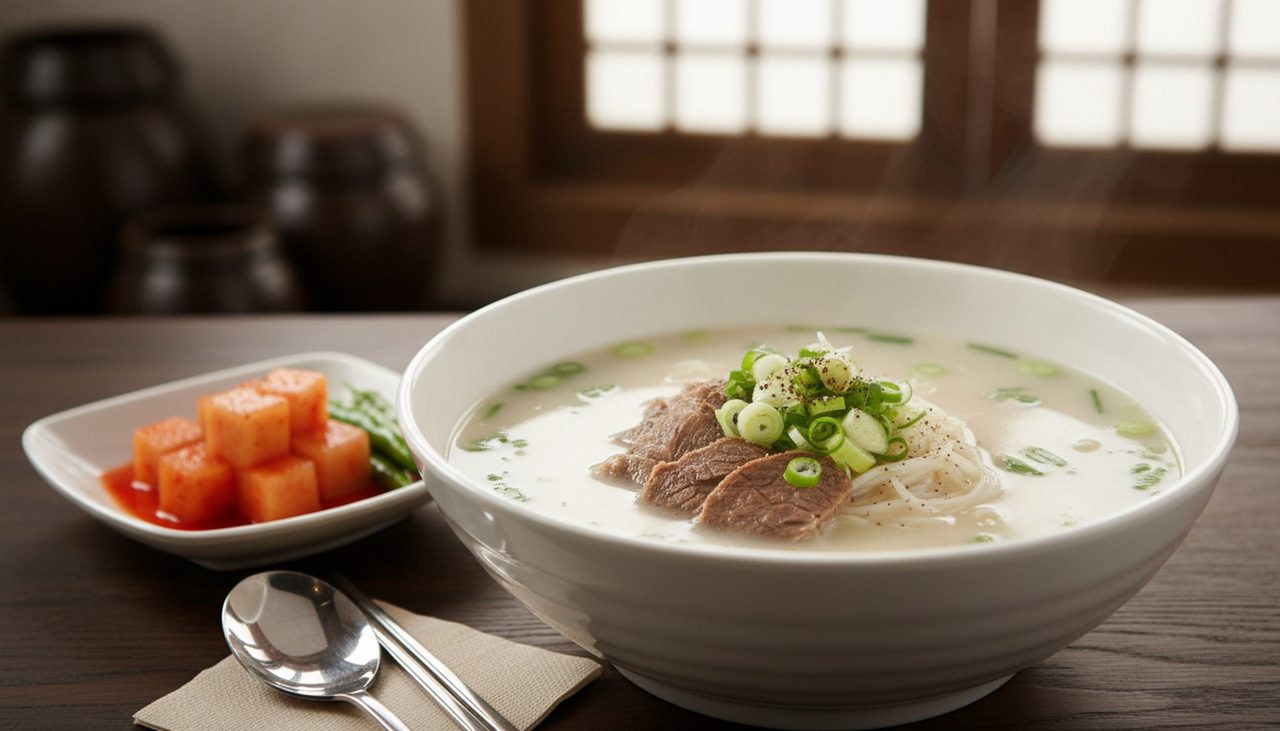
The "harmony of flavors" is central to hansik as a food culture — it pursues a cuisine in which diverse tastes are precisely balanced. Western popular food, by contrast, tends to amplify a single dominant flavor. A creamy pasta, for instance, is layered with grated cheese, bacon and a soft-boiled yolk to intensify its rich, savory depth. That approach differs markedly from hansik, where a mild knife-cut noodle dish is paired with spicy kimchi to create balance.
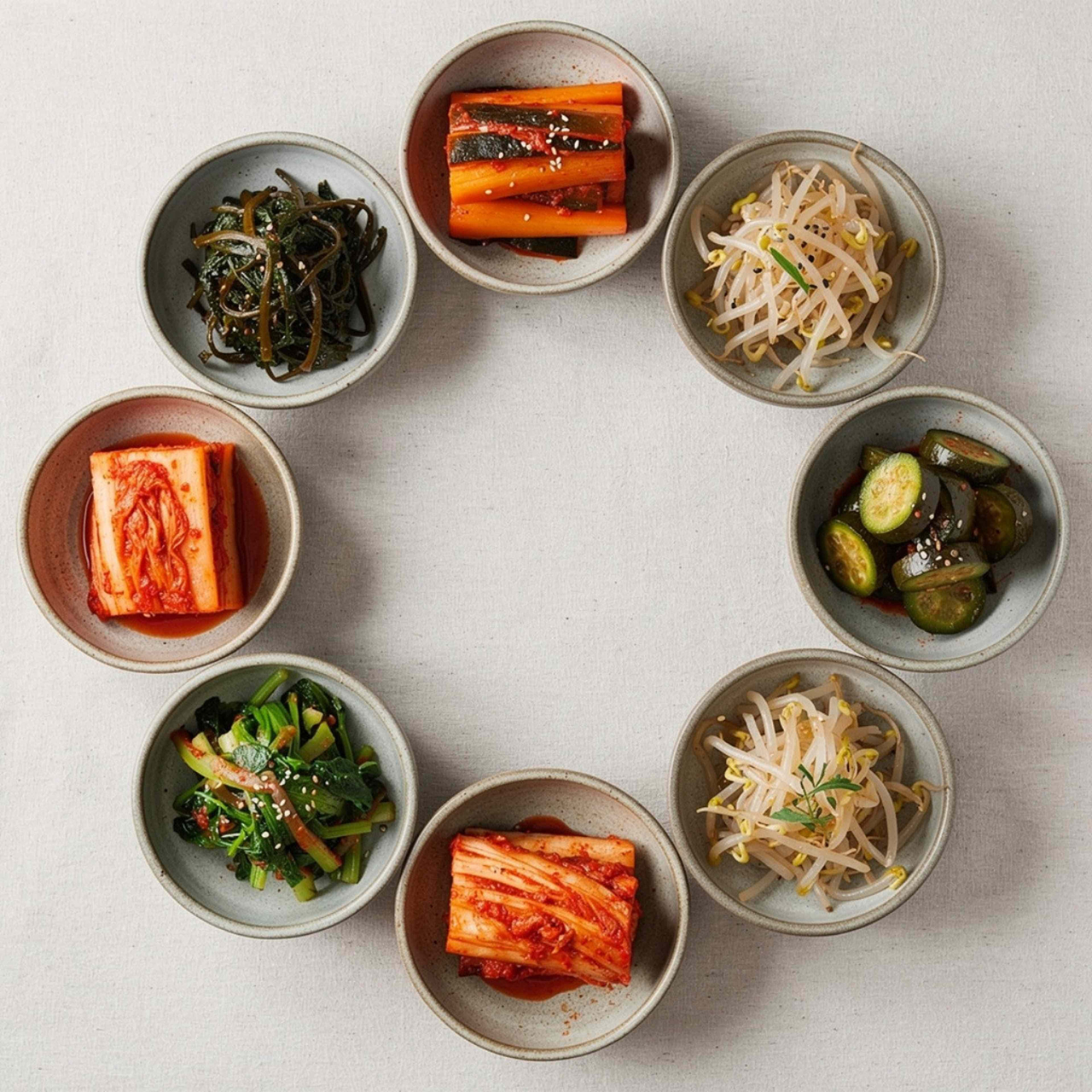
Alongside its harmony of flavors, hansik's reflection of "communal culture" is another quality drawing global attention to culinary hallyu. It embodies values of living together and sharing. A 2004 paper by the Department of Food and Nutrition at Kyung Hee University, published in the Journal of the Korean Society of Dietary Culture, found that the traditions of kimjang — communal kimchi-making — and fermenting sauces carry the mutual-aid spirit of an agrarian society, while the shared table with banchan placed at the center preserves a communal way of eating.
This communal instinct is also visible in a question Koreans commonly ask when looking at a menu: "What are you going to have?" It is a question Westerners rarely pose. For Koreans, what a dining companion orders often shapes their own choice — partly to find a food pairing that works well when dishes are shared, and partly to match the other person's price range or style. Unlike the individualistic Western table, the Korean table carries a culture that places communal values at its heart.
The New York Times wrote in 2022 that Korea is currently "the most outstanding country in the world in terms of culinary soft power — the ability to exert influence through appeal and persuasion." K-food, the assessment goes, is not a byproduct of hallyu but a core pillar of soft power that expands national image and economic influence.
Experts rank food among the most powerful forms of soft power in the modern era, because once people grow accustomed to a cuisine, they tend to consume it for a lifetime. That staying power sets it apart from a single K-pop group, one drama series or a cosmetics purchase. Analysts argue that hansik will therefore play a crucial role in sustaining hallyu going forward.
"Food, which people eat every day, is different from other cultural content," Song said. "Once hansik takes root in daily life, it can be consumed repeatedly, which means its influence is likely to endure." She added that "hansik carries Korea's unique identity and values — its history, regions and seasons — and can therefore serve as an important vehicle for soft power."
gorgeous@heraldcorp.com