Starch batter, double frying keep the crunch even under sauce; hallyu wave and delivery platforms fuel a market set to grow 7.6% annually through 2034

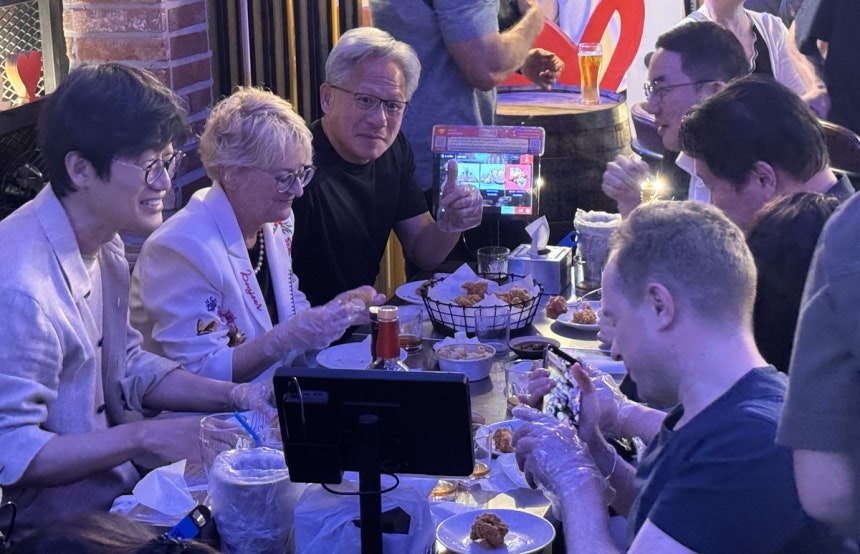
Call it the ultimate K-fried chicken tour by someone who really knows how to eat.
Jensen Huang's latest visit to South Korea drew affectionate jokes from younger Koreans after the Nvidia CEO was spotted eating fried chicken at multiple events — just as he had on previous trips. His very public appetite has put the global appeal of Korean fried chicken back in the spotlight.
On the first day of his visit, Huang chose BBQ's Hongik University entrance branch for a late-night outing. On June 7, he ordered BBQ by delivery at Jamsil Baseball Stadium in Seoul.
His love of K-fried chicken is no passing fancy reserved for Korea trips. Huang has said he regularly visits Korean pub-style restaurant 99 Chicken near Nvidia's headquarters in Silicon Valley.
So what makes Korean fried chicken so irresistible? Food companies and media outlets abroad have offered their own analyses of how a country that did not invent fried chicken managed to conquer the world with it. Their explanations range from global taste trends to the cooking chemistry behind the crunch.
Four factors stand out: the science of starch-based batter and double frying, and the market dynamics of Korean-style sauces and expanding delivery platforms.
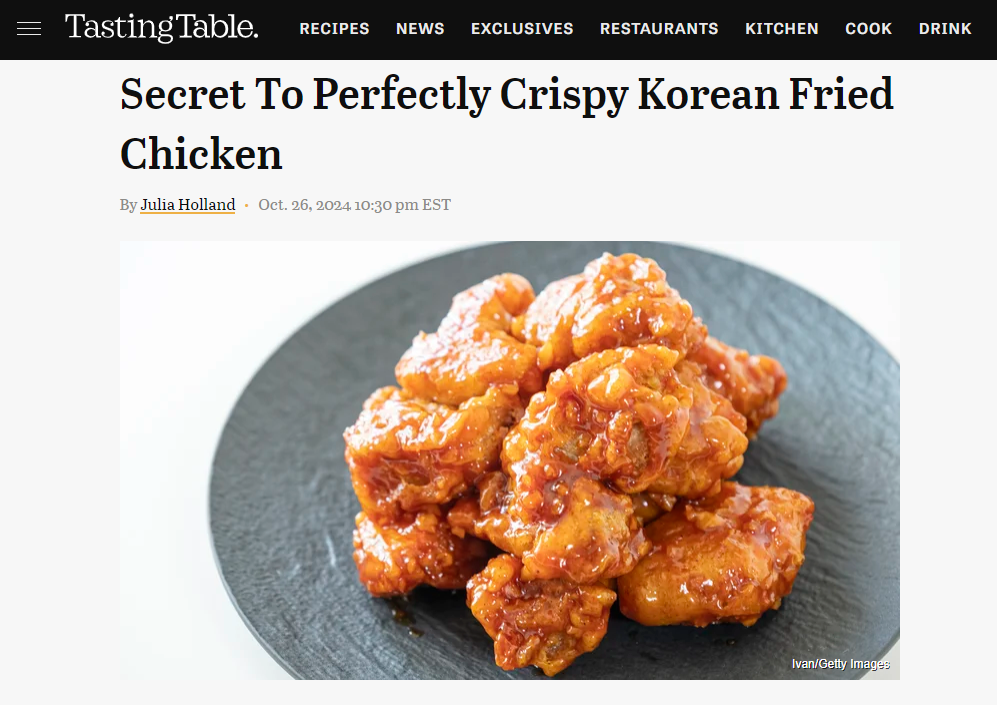
The defining trait of Korean fried chicken is that it stays crispy even after being coated in sauce. US food outlet Tasting Table was among those that zeroed in on this quality, citing a local chef who explained that Korean fried chicken batter combines wheat flour with cornstarch, potato starch or rice flour — the "key secret" to that signature crunch.
Wheat flour's gluten forms the basic structure of the batter, but it also traps moisture inside during frying, making it difficult for steam to escape. Trapped moisture is what turns a coating soggy.
Starch ingredients, by contrast, contain no gluten. When they hit hot oil, moisture escapes easily — the scientific principle that produces a thinner, crispier crust.
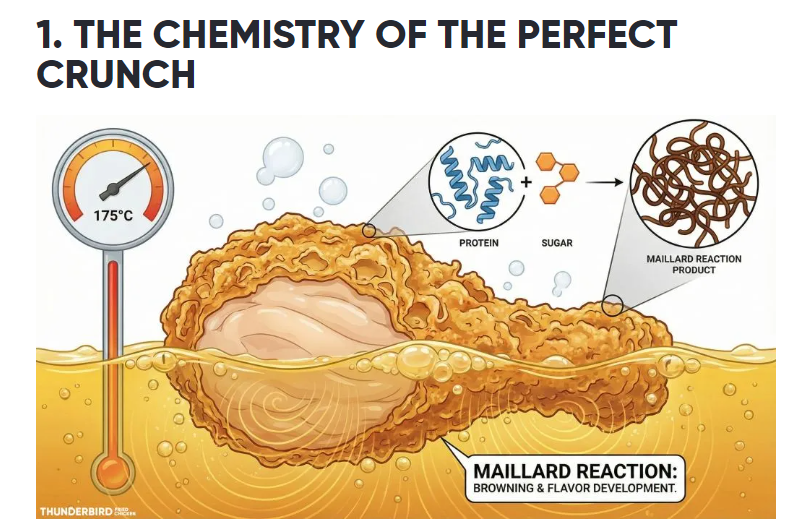
The second factor is double frying. Frying the chicken twice drives off most of the remaining moisture, producing an even crispier coating that holds its texture after sauce is applied.
US culinary outlet America's Test Kitchen called double frying "the key secret behind Korean fried chicken's worldwide popularity," describing the technique as frying the chicken until the skin just begins to crisp, pulling it out to rest for a few minutes, then returning it to the oil. The first fry cooks the meat through; the second crisps the exterior.
That crunch does more than please the palate — it also stimulates the senses through sound. A 2004 study by researchers at the University of Oxford found that the crackling noise produced when biting into fried chicken sends a positive signal to the brain, boosting overall satisfaction with the food.
Global market research firm Dataintelo examined Korean fried chicken's popularity through the lens of shifting taste trends and retail structures. Its report attributed the rise of Korean-style fried chicken to a combination of factors: the hallyu wave, growth in online food delivery platforms, the scalability of the franchise model, and rising demand among 18-to-35-year-old consumers for bold, sensory-driven flavors.
The report particularly highlighted the influence of Korean-style sauces, saying that varieties such as gochujang, honey butter and soy garlic set Korean fried chicken apart from other fast-food chicken offerings.
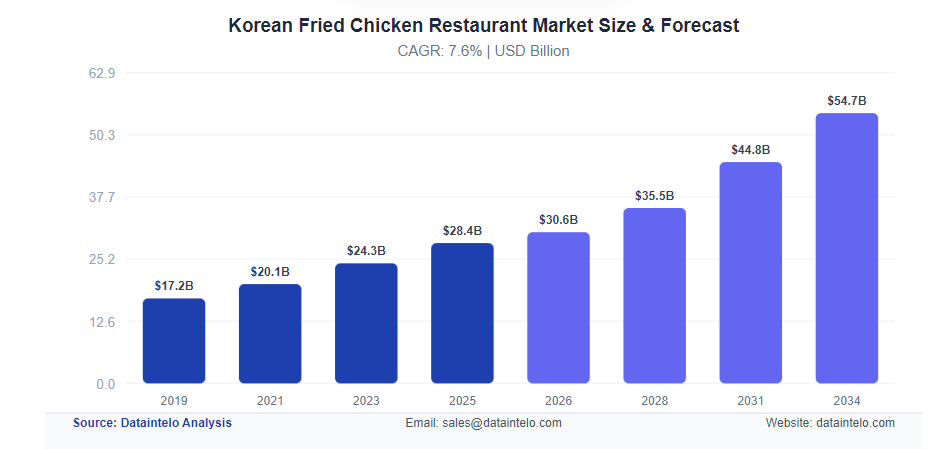
According to the Dataintelo report, the global Korean-style fried chicken market was worth $28.4 billion last year. It is forecast to grow at an average annual rate of 7.6 percent from 2026 through 2034.
gorgeous@heraldcorp.com