The green alga tones down the smell of salted seafood and garlic while leaving a refreshing aftertaste; it also packs more iron than miyeok or hijiki
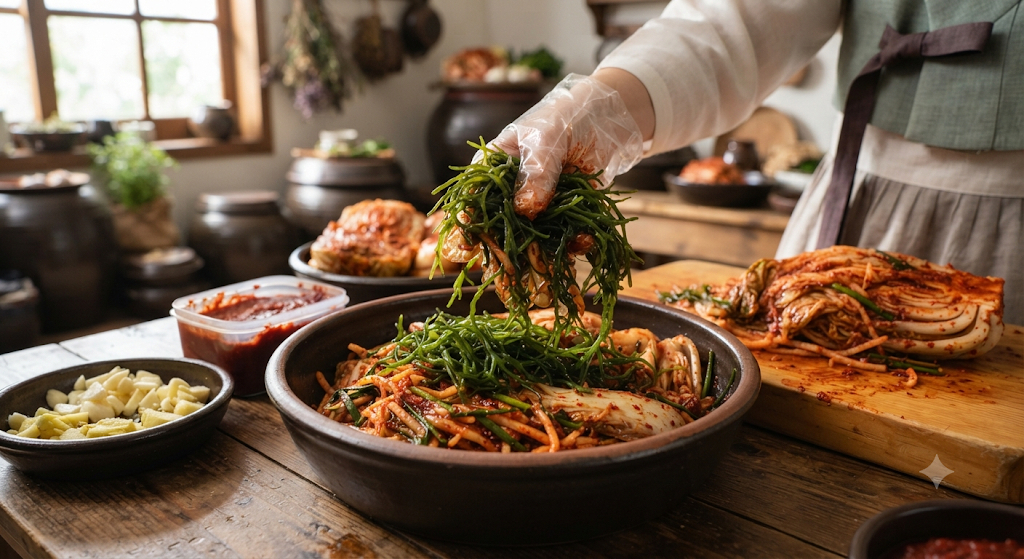
For those looking to add a new dimension to this year's kimjang kimchi, mixing cheongak — a dark green branching seaweed — into the filling is worth considering. The ingredient softens the pungent smell of salted seafood and raw garlic.
According to the Seafood Safety Information Service operated by the Korea Fisheries Association, cheongak has long been used as a kimchi ingredient. Added to the filling, it reduces the fishy odor from salted seafood and the sharp smell of garlic, and leaves a clean, refreshing aftertaste — helping the complex blend of kimchi ingredients finish smoothly on the palate.
To incorporate cheongak into kimchi, first trim the seaweed, blanch it briefly in salted water, then chop it finely. Mix the chopped cheongak into the kimchi seasoning paste to make the filling, then spread it between the leaves of salted cabbage as usual.
Adding cheongak also boosts the nutritional profile of the kimchi. According to the Seafood Safety Information Service, cheongak is rich in minerals, vitamin C and dietary fiber. The calcium content per 100 grams approaches the recommended daily intake of 700 milligrams for adults. Particularly notable is its iron content: 100 grams of cheongak provides roughly three times the recommended daily intake — more than brown algae such as miyeok (sea mustard), hijiki and kelp. It also contains acrylic acid, which has antibacterial properties. More recently, researchers have identified anti-cancer and immune-activating compounds in cheongak, drawing growing interest across multiple fields as a potentially valuable marine alga.
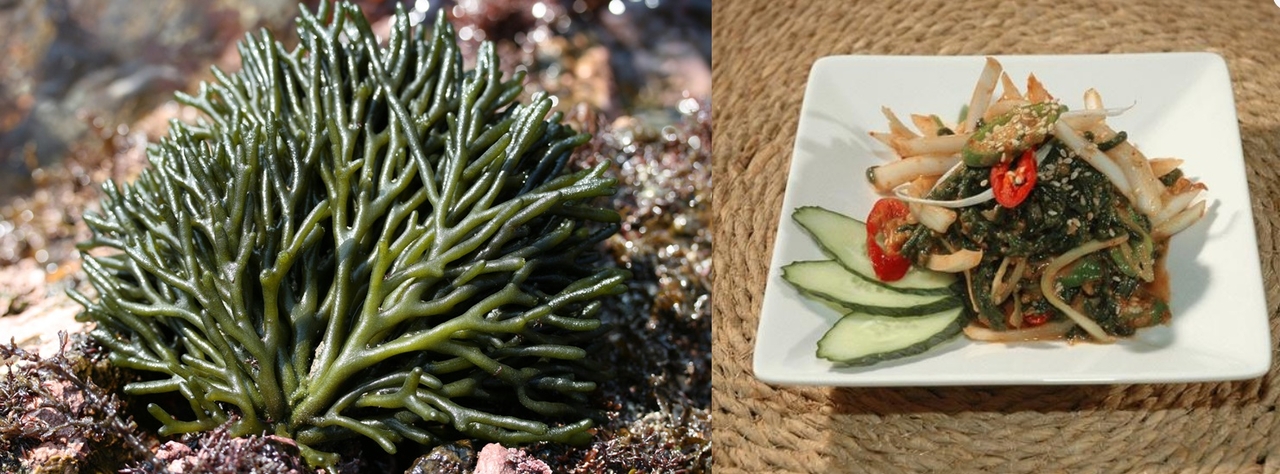
Cheongak is a dark bluish-green seaweed with slender, irregularly forking branches that resemble deer antlers. It grows along the entire Korean coastline, attaching itself to underwater rocks and shellfish. Beyond Korea, it is eaten in parts of Asia including China and Japan.
Cheongak can be used fresh or reconstituted from its dried form. When buying fresh cheongak, look for plump, deeply colored pieces; dried cheongak should have a silvery sheen. To prepare the dried variety, soak it in cold water for 20 to 30 minutes, then rinse before cooking.
Outside of kimchi, cheongak works well as a standalone banchan. The simplest preparation is to blanch it in boiling water, as you would miyeok, and serve it with spicy red pepper paste for dipping.
It can also be tossed as a seasoned salad. A classic cheongak muchim starts with briefly blanching the seaweed, squeezing out the water and cutting it into bite-sized lengths. Julienned onion and sliced chili peppers are added, then the whole mixture is tossed with red pepper flakes, soy sauce, vinegar, minced garlic, green onion and sesame seeds.
A doenjang-based version is another option. Blanch the cheongak, drain it well, then combine it with onion and chili peppers. Toss everything together with doenjang, minced garlic and sesame salt until evenly coated.
Cheongak also lends itself to cold soup. Paired with cucumber and chili peppers, it forms the base of cheongak naengguk, a chilled broth dish that makes a light and refreshing accompaniment to a meal.
gorgeous@heraldcorp.com