Mirror carp joins gizzard shad as 'seafood of the month' for September
Farmed freshwater fish prized for its firm, clean-tasting flesh
When autumn arrives, gizzard shad tends to steal the spotlight on Korean dinner tables. But mirror carp — known in Korean as hyangeoh — is another freshwater fish worth seeking out in September. While gizzard shad is celebrated for its rich, nutty flavor, mirror carp stands out for its springy, firm flesh and clean, mild taste.
The Ministry of Oceans and Fisheries named mirror carp alongside gizzard shad as its seafood of the month for September. Though both are autumn staples, the two fish differ in habitat, flavor and body shape. Gizzard shad is a saltwater species caught at sea, while mirror carp is a farmed freshwater fish. Gizzard shad is consumed as a seasonal delicacy that peaks in autumn, whereas mirror carp is farmed year-round and available throughout the year.
According to Eosik Baekse, the Ministry of Oceans and Fisheries' seafood information portal, mirror carp is distributed domestically through aquaculture. Introduced to Korea from Israel in 1973, it has since become one of the country's major farmed fish species. Last year, domestic mirror carp output came to about 1,700 tons, making it the fifth-largest freshwater farmed fish by volume in Korea.
The fish can grow to weigh 2 to 3 kilograms. Its plump, rounded body has earned it the nickname "water pig."
Gizzard shad, by contrast, is a smaller fish. Its fine, soft bones make it suitable for eating whole — bones and all — in the style known as ssekkosi, offering a satisfying crunch with every bite.
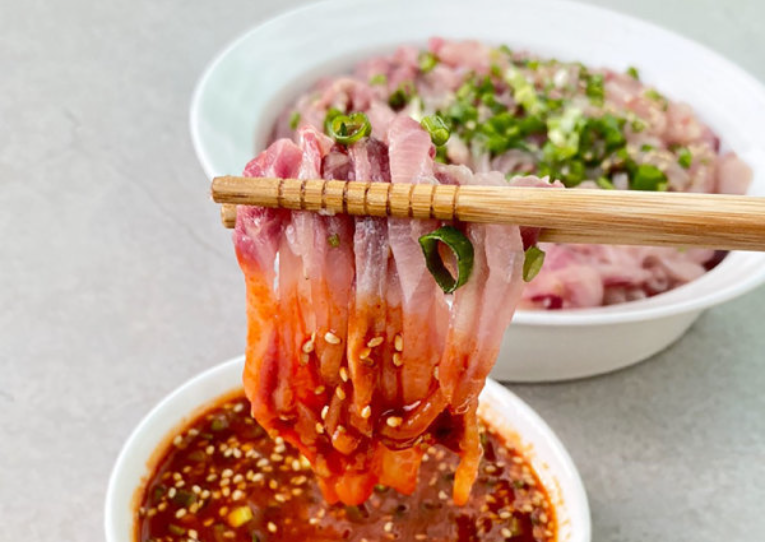
Mirror carp is best appreciated as hoe, raw sliced fish, where its firm, elastic flesh delivers a pleasantly chewy texture. Sprinkling ground chopi pepper — also called jepi powder — over the slices adds a sharp, aromatic kick that deepens the overall flavor.
After finishing the raw fish, the head, bones and remaining meat can be simmered with radish, green onion and water parsley to make a spicy mirror carp stew. The fish's mild flavor melds well with the bold, peppery broth.
Mirror carp also makes an excellent steamed dish. The thick flesh holds its texture well and develops a savory depth of flavor. A simple marinade of soy sauce, ginger, garlic and cheongju rice wine keeps the preparation light and clean.
For a more restorative meal, the fish can be steamed with astragalus root and acanthopanax, with the herbal broth seasoned with soy sauce.
When storing filleted mirror carp at home, wrap it in paper towels, place it in an airtight container and refrigerate — ideally consuming it within a day. For longer storage, divide it into single-serving portions and freeze. Previously refrigerated raw fish is best cooked rather than eaten raw again.
Mirror carp is also a solid source of high-quality protein. According to the National Institute of Fisheries Science's standard seafood composition table, raw mirror carp contains 16.8 to 19.9 grams of protein per 100 grams, depending on where and when it was harvested. The fish is also rich in omega-3 fatty acids, including DHA and EPA, and contains taurine, potassium and calcium.
gorgeous@heraldcorp.com