As peanut butter continues to grow in popularity, a common complaint has emerged among consumers: the spread turns hard and clumpy when refrigerated, making it difficult to apply to bread or other foods.
Many assume the problem is simply a matter of refrigerator temperature, but the texture of peanut butter can also depend on the fatty acid composition of the peanuts used. More than 80 percent of the fat in peanuts consists of the unsaturated fatty acids oleic acid and linoleic acid. Oleic acid is relatively stable against oxidation, making it well-suited for long shelf life and retail distribution, but it tends to harden easily at cool temperatures. Linoleic acid, by contrast, stays comparatively soft even when chilled. Producers prioritizing long-term distribution can opt for varieties with a higher oleic acid ratio, while those seeking a spreadable texture straight from the refrigerator can choose varieties with a relatively higher proportion of linoleic acid.
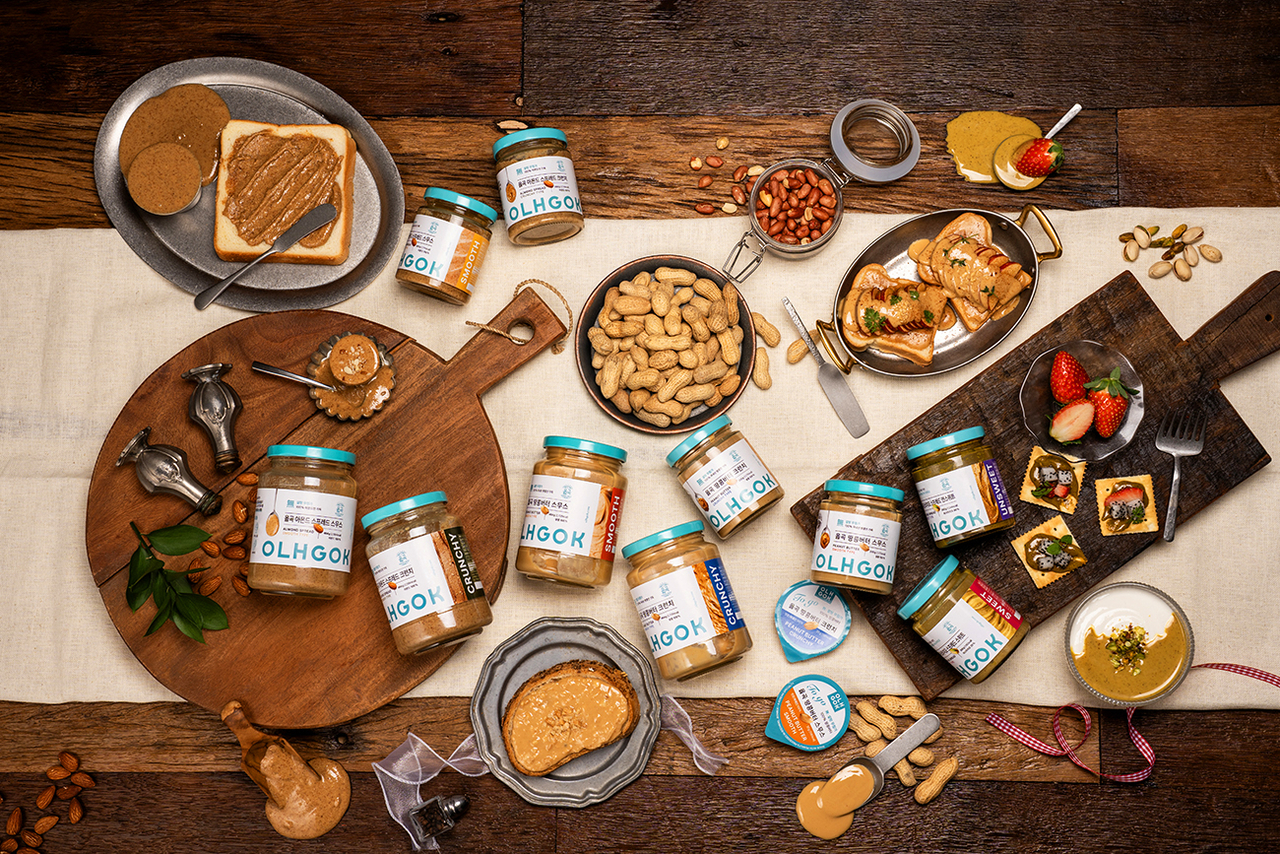
Peanut butter brand Okgok has addressed this by using the domestic Palgwang variety, which the company says improves spreadability. According to Okgok, the fatty acid profile unique to this Korean-bred variety allows the butter to maintain a smooth, refrigerator-friendly texture without chemical additives or plant-based emulsifiers.
Okgok also boosts moisture content by using freshly harvested autumn peanuts — known as "haet-ttangkong," or new-crop peanuts — picked around October. Peanuts harvested fresh contain more moisture than stored peanuts, and their nutty flavor is at its peak.
The brand adheres to a zero-additive principle, excluding sugar, preservatives and other additives entirely. It has also earned strict vegan certification from the Korea Vegan Certification Institute.
The product lineup includes a smooth variety suited for dipping or sandwiches and a crunchy variety that preserves the texture of peanut pieces, along with peanut-based granola. The brand recently added a salted caramel peanut butter, which layers sweet and savory notes.
"The domestic Palgwang variety was developed to suit Korea's growing conditions and offers stable yields and strong productivity," an Okgok official said. "Because we use only 100 percent domestic new-crop peanuts at peak freshness, with no additives whatsoever, consumers will be able to enjoy outstanding spreadability and the deep, natural flavor of the peanut itself."
gorgeous@heraldcorp.com